

Language as a Key Barrier to Workforce Participation
New Zealand has experienced significant migration over recent decades, with migrants arriving from a wide range of countries to contribute to sectors including healthcare, hospitality, agriculture, manufacturing, logistics, construction and services. Many migrants arrive with valuable skills and professional experience. However, limited English language capability can make it difficult for individuals to fully utilise those skills in the New Zealand labour market.

Language capability is one of the most critical factors determining how effectively migrants can participate in the New Zealand workforce and wider community.
Language barriers can affect multiple aspects of employment and daily life. Without sufficient language capability, migrants may find themselves working below their skill level or struggling to progress within their careers. Language barriers also affect social integration — migrants may feel isolated or hesitant to engage with community activities, local services or civic institutions if communication is challenging.
Community organisations and government agencies recognise that language capability is one of the most important factors supporting successful settlement and workforce participation. However, delivering effective language programmes across regional communities can be difficult without organisations that have the experience, networks and operational capacity to manage training delivery. Eastern Bridge Education was established to address this challenge.
Many migrants live and work in regional communities where access to language training is limited. Traditional classroom-based programmes in larger cities are not practical for individuals in smaller towns.
Migrants working in busy environments need practical training that helps them communicate effectively in workplaces and everyday situations — not purely academic language programmes.
Migrants come from a wide range of linguistic and cultural backgrounds. Training must be adaptable and inclusive while maintaining a structured learning framework that delivers consistent outcomes.
Many training initiatives rely on government funding support, which requires providers to meet specific delivery, quality and reporting requirements — adding administrative complexity to programme management.
What the Programme Was Designed to Achieve
The English language and workplace literacy programmes delivered by Eastern Bridge were designed with four interconnected objectives, each contributing to both individual participant outcomes and broader regional workforce development.
Participants develop practical English language skills that help them communicate effectively in workplaces and everyday life. Training focuses on real-world scenarios rather than purely academic language learning — ensuring skills are immediately applicable.
Improved language capability enables migrants to access better employment opportunities, participate in workplace training and engage confidently with employers and colleagues — opening pathways to career progression that were previously inaccessible.
Language training supports migrants in participating more fully in local communities, accessing services and building relationships within their neighbourhoods. Improved communication confidence has a transformative impact on everyday life and social participation.
By improving communication skills and workplace confidence, the programmes help employers benefit from a more capable and engaged workforce — contributing to regional economic development in communities that rely on migrant labour to support key industries.
How the Programmes Are Designed and Delivered
Eastern Bridge's language training programmes are designed to be practical, accessible and responsive to the needs of migrant communities. Four defining features shape the programme model.
Rather than requiring participants to travel to central locations, Eastern Bridge works with community organisations, employers and local institutions to deliver training within regional communities — in community centres, workplaces and educational facilities.
Training focuses on real-world communication: workplace vocabulary, safety information, communicating with supervisors, customer interaction, and understanding forms and documentation — skills participants can apply immediately.
Sessions are delivered at times that align with participants' work schedules — evenings, weekends, or structured multi-week courses. Targeted workshops address specific workplace communication needs for employers with particular requirements.
Local community organisations play a vital role in connecting training with migrant communities. These partnerships ensure programmes reach individuals who might otherwise have limited access to training opportunities.
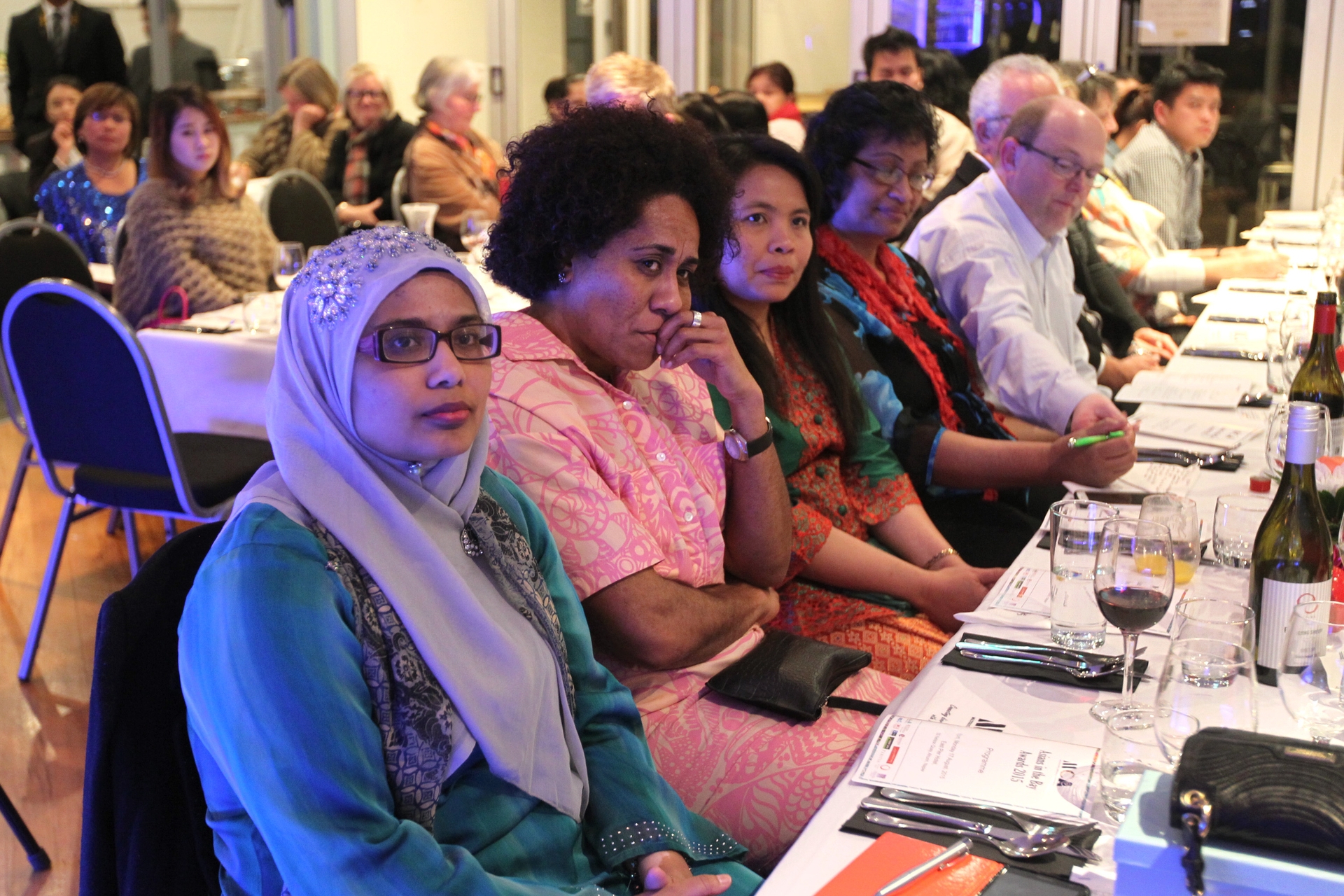
Migrant business owners and workers across Hawke's Bay and other regional centres have benefited from practical, community-based language training.
Eastern Bridge is a registered Private Training Establishment (PTE), which allows the organisation to access government-supported training programmes where eligibility criteria are met. Government funding support plays an important role in making language training accessible — by reducing or eliminating participation costs, funding programmes enable more individuals to benefit from training opportunities. Eastern Bridge works with government agencies and programme administrators to ensure that training delivery meets required standards and reporting requirements.
For many migrants, gaining confidence in English communication has a significant impact on everyday life. Being able to express ideas clearly, ask questions and participate in conversations can significantly improve job satisfaction and open doors to professional development that were previously out of reach.
— Eastern Bridge Education DivisionProgramme Impact Across Participants, Employers and Communities
The language training programmes delivered by Eastern Bridge have generated positive outcomes across four groups: the migrant participants themselves, their employers, the wider community, and the regional economy.
Participants report that improved language capability helps them communicate more confidently with employers and colleagues. Stronger communication skills enable individuals to take on additional responsibilities, access training opportunities and pursue career progression within their organisations.
Participants feel more comfortable interacting with local services, participating in community events and engaging with neighbours and colleagues. Improved language capability also supports families — particularly when parents can communicate more effectively with schools, healthcare providers and community organisations.
Training programmes have been well supported by local communities. Community organisations, employers and participants have demonstrated strong interest in continuing language training initiatives. Participants often develop new networks and friendships through training, contributing to stronger community cohesion.
Employers benefit from improved communication in the workplace, which enhances productivity, safety and team collaboration. Language training programmes contribute to stronger workforce participation and productivity in regions where employers rely on migrant labour to support key industries.

Regional New Zealand communities — including Hawke's Bay — have become home to diverse migrant communities whose contributions are strengthened by targeted language capability programmes.