

Bridging the Gap Between Government and Community
The New Zealand Census is the foundation upon which the country’s public services are built. Every five years, the data it produces informs billions of dollars in government funding decisions — from hospital resourcing and school allocations to infrastructure planning and settlement support services. For this system to function equitably, every person in the country must be counted. Yet for New Zealand’s rapidly growing migrant communities, participation in the census has historically been far from guaranteed.
In 2023, Statistics New Zealand engaged Eastern Bridge to design and execute a targeted community engagement programme in the Hawke’s Bay region. The brief was direct: reach the migrant communities that standard government communication channels consistently fail to reach, build the trust necessary to convert awareness into action, and ensure that every person — regardless of language, cultural background, or familiarity with government processes — had a genuine opportunity to be counted. This case study documents how Eastern Bridge approached that challenge, the model it deployed, and the lasting significance of the work for New Zealand’s approach to inclusive data collection.
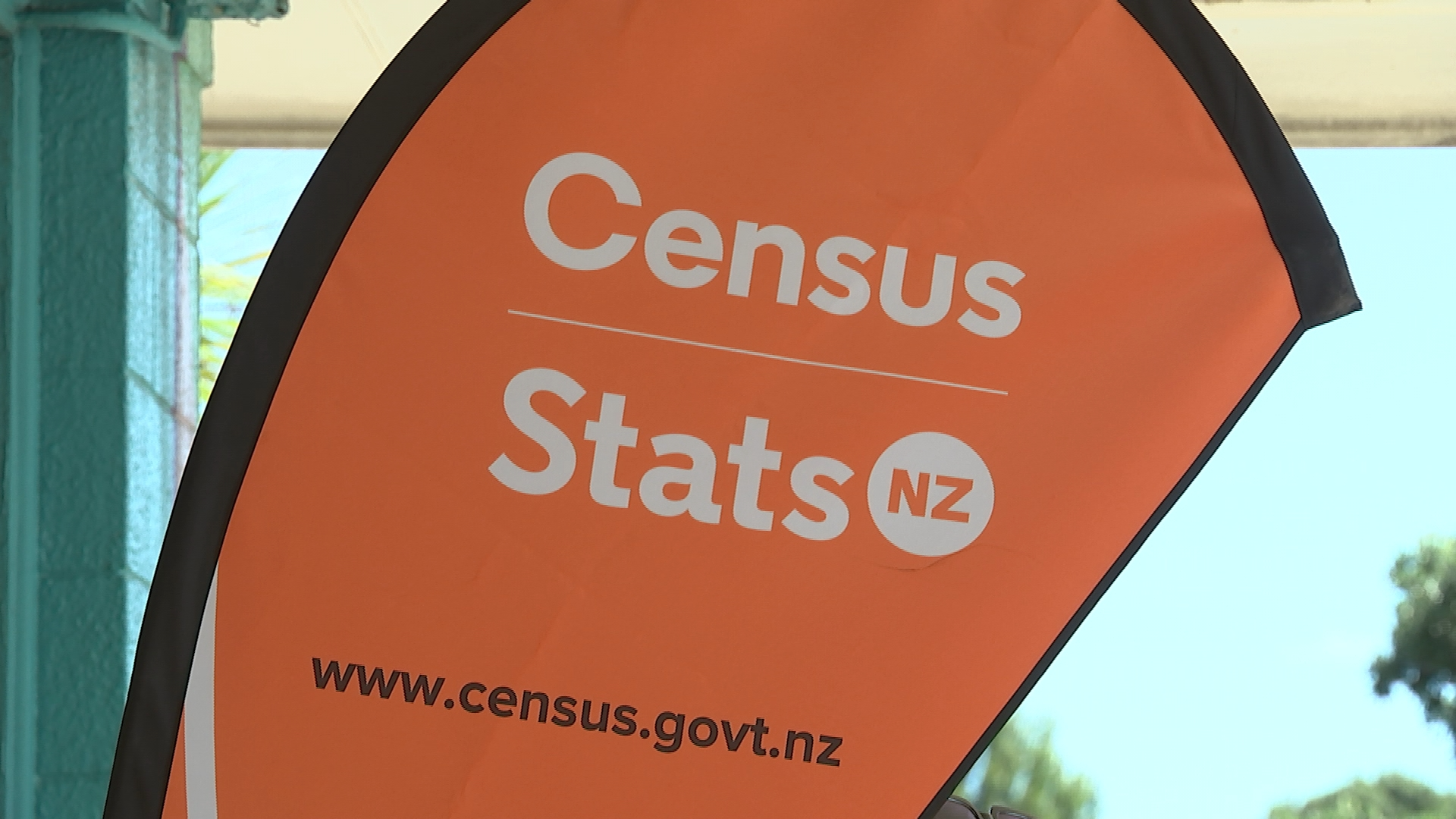
Statistics New Zealand’s 2023 Census campaign — Eastern Bridge helped translate this national effort into genuine community participation across Hawke’s Bay.
A Nation Counting Itself — and the Communities It Misses
New Zealand is one of the most ethnically diverse nations in the world. The 2023 Census recorded 1.4 million overseas-born residents and identified speakers of over 150 languages. The country’s migrant population is not only large — it is growing at a remarkable pace. Between the 2018 and 2023 Censuses, the number of Philippines-born residents increased by 46.8 percent, India-born residents by 21.8 percent, and South Africa-born residents by 33.9 percent. The Asian ethnic group recorded the largest numeric increase of any group — up 153,978 people. This diversity is a national strength, but it also presents a profound challenge for data collection.
International and domestic evidence consistently demonstrates that migrant and ethnic communities are at elevated risk of census non-response. The reasons are complex and deeply human. New arrivals may not understand what the census is, or why it matters. They may distrust government data collection, particularly if they have come from countries where such processes were used for surveillance or control. Language barriers can make the forms inaccessible. Cultural norms around privacy may create hesitation. And for communities that are transient or socially isolated, the standard channels through which the census is communicated — mail, digital platforms, mainstream media — may simply not reach them.
Statistics New Zealand was acutely aware of these challenges going into the 2023 Census. Following the widely criticised 2018 Census, in which response rates fell to a 30-year low of 85.8 percent, the agency committed to a fundamentally different approach. The mission for 2023 was to “rebuild trust and confidence in the census and deliver quality data to customers.” Ethnic communities — defined as people with English as a second language — were formally designated as a priority response group, alongside Māori, Pacific peoples, young people, and disabled people. Together, these groups accounted for approximately 30 percent of all New Zealanders.
Source: Statistics New Zealand, 2023 Census Population Counts by Ethnic Group.
In Hawke’s Bay, official census data suggests a permanent resident population of approximately 200 people from South Korea. However, community-level engagement and local knowledge indicate the actual number of permanent Korean residents is likely closer to 400 — and this figure excludes international students, working holiday visa holders, temporary workers, and tourists. This discrepancy is not an anomaly. It is a symptom of a broader, systemic challenge: when communities are undercounted, their needs become invisible to the government agencies responsible for serving them.
Eastern Bridge — Community Intelligence Report, Hawke’s Bay, 2023Four Barriers Standing Between Migrants and the Census
For Statistics New Zealand, the challenge in Hawke’s Bay was to reach a diverse, geographically dispersed, and culturally varied migrant population through an agency that — by its own admission — had historically relied on transactional, one-size-fits-all communication strategies that failed to reach these groups. Four distinct barriers needed to be addressed simultaneously:
Census forms and official communications were available in English and te reo Māori, but not in the primary languages of many migrant communities. Without accessible information, participation was structurally impossible for many residents.
Many migrants had come from countries where government data collection was associated with surveillance, control, or discrimination. Overcoming this deeply ingrained distrust required more than information — it required the credibility of a trusted intermediary.
Migrant communities — particularly newer arrivals — are often not reached by mainstream media, government mail, or digital platforms. They exist within their own community networks, which government agencies typically cannot access directly.
Even migrants who understood the census and wanted to participate faced practical barriers: complex forms, unfamiliar terminology, and a lack of accessible support to complete the process correctly. Awareness alone was insufficient — practical assistance was essential.
What Statistics New Zealand Set Out to Achieve
Statistics New Zealand engaged Eastern Bridge to develop and execute a targeted community engagement strategy for the census in the Hawke’s Bay region. The programme had four clear objectives, each addressing a distinct dimension of the participation challenge. These objectives were aligned with Statistics New Zealand’s national strategy for the 2023 Census, which placed particular emphasis on “earlier, wider, and permanent engagement with communities” and on “developing community-led solutions” for priority response groups.
| Objective | Description | Status |
|---|---|---|
| Increase Census Participation | Directly boost the number of census forms completed correctly within migrant and ethnic communities across the Hawke’s Bay region. | Achieved |
| Build Trust and Understanding | Demystify the census process, explaining its purpose and demonstrating how participation directly benefits migrant communities through better-funded services. | Achieved |
| Overcome Language Barriers | Provide accessible, multilingual information and direct language support to ensure every community member could engage with the census process. | Achieved |
| Create a Replicable Model | Develop a community engagement framework that could be adapted and applied by other government agencies seeking to connect with diverse migrant populations. | In Progress |
A Strategy Built on Trust, Not Just Information
Eastern Bridge designed a multi-faceted engagement strategy grounded in a foundational principle: in migrant communities, trust is the currency of participation. The approach moved deliberately beyond simple information dissemination to active, on-the-ground engagement. It recognised that migrant communities are not monolithic — each has its own communication norms, cultural values, and relationship with government authority. A strategy that works for the Chinese community may be entirely ineffective for the Korean or Filipino community, even if the practical barriers are similar.
Eastern Bridge’s approach was informed by its deep, long-standing relationships with migrant communities across the Hawke’s Bay region. These relationships — built over years of community development work, cultural advisory services, and language support — gave the organisation access to the informal networks, trusted leaders, and community spaces that government agencies cannot reach through standard channels. The engagement strategy was structured around four core pillars, each designed to address a specific barrier to participation:
Eastern Bridge began by conducting a systematic mapping of migrant community groups, cultural organisations, religious institutions, and informal community leaders across Hawke’s Bay. This intelligence — built from years of on-the-ground community work — provided Statistics New Zealand with a clear picture of the migrant landscape that no government database could replicate. Crucially, it identified the trusted intermediaries within each community through whom engagement would be most effective.
Eastern Bridge produced culturally adapted information resources in Mandarin, Korean, Tagalog, Hindi, and other languages relevant to the Hawke’s Bay migrant population. These were not simple translations of government materials. Each resource was adapted for its specific cultural context — addressing the particular concerns, communication norms, and trust barriers of each community. Resources were distributed through trusted community channels, including cultural associations, places of worship, community events, and social media networks used within each community.
Eastern Bridge staff attended cultural events, community gatherings, and informal social occasions to engage directly with migrant community members. These interactions were not formal presentations — they were conversations. Eastern Bridge representatives answered questions about data privacy and confidentiality, explained how census data is used to fund community services, and addressed the specific concerns and misconceptions prevalent within each community. This face-to-face engagement, conducted in community members’ own languages, was central to building the trust necessary to convert awareness into action.
Eastern Bridge established accessible census support centres at locations familiar and comfortable to migrant communities across the region. These centres provided one-on-one form completion assistance, on-the-spot translation and interpreting services, and a safe, welcoming, non-judgmental environment for people who found the process intimidating or confusing. The support centres were deliberately located in community spaces — not government buildings — to reduce the psychological barrier of engaging with an official government process.

Migrant-owned businesses in Hawke’s Bay were key community touchpoints — trusted spaces where Eastern Bridge could reach people in their own language and cultural context.
Successful engagement with migrant communities requires more than information — it requires presence, patience, and the willingness to meet people on their own terms. Government agencies often have the intent but lack the community relationships needed to make that connection. That is precisely where Eastern Bridge plays its role.
Simon Appleton — Founder & Principal, Eastern Bridge LimitedFrom Engagement to Action: Measurable Results
The programme delivered measurable results across multiple dimensions. By combining community trust-building with practical, accessible support, Eastern Bridge was able to convert awareness into action — and action into improved data quality for the Hawke’s Bay region. The 2023 Census ultimately achieved a national response rate of 87.6 percent, up from 85.8 percent in 2018, with Statistics New Zealand reporting improved coverage among ethnic communities nationally. The programme demonstrated a principle that is well-established in community development practice but often underestimated in government engagement: targeted, culturally-informed outreach, delivered through trusted intermediaries, can dramatically improve participation rates among communities that would otherwise be missed by standard government communication channels.
Large numbers of migrants attended support centres and completed census forms with assistance, directly improving participation rates within targeted communities in the Hawke’s Bay region.
Multilingual materials and on-site interpreting services removed the practical language barriers that had historically prevented many migrants from completing the census.
Direct, face-to-face engagement built lasting relationships between Eastern Bridge, community leaders, and Statistics New Zealand — a foundation for future government engagement programmes in the region.
The engagement model developed for this programme provides a practical, tested template for government agencies seeking to connect with diverse migrant communities across New Zealand.
Source: Statistics New Zealand. The 2023 Census achieved an 87.6% response rate, recovering from the 2018 low and reflecting the impact of targeted community engagement programmes.
Why Accurate Migrant Data Matters for All New Zealanders
The significance of this programme extends well beyond the census itself. Accurate population data is the foundation upon which effective government is built. When migrant communities are properly counted, the benefits flow through every level of public service delivery. The Hawke’s Bay example — where the Korean resident population may be double what official data suggests — is not an isolated case. It is a window into a broader national challenge. As New Zealand becomes increasingly diverse, the ability of government agencies to accurately count, understand, and serve all communities will become ever more critical to social cohesion and equitable service delivery.
The 2023 Census — accurate data from every community underpins equitable funding for health, education, and infrastructure across New Zealand.
| Area of Impact | Description | Scale |
|---|---|---|
| Health Funding | The Ministry of Health uses census data to allocate local health funding. Accurate migrant population data ensures that communities with specific health needs — including language-appropriate services — receive adequate resourcing. | Regional |
| Education | School funding and English Language Learning (ELL) resource allocation are informed by population data. Undercounting migrant families results in schools being under-resourced to support the students they actually serve. | Regional |
| Settlement Services | Immigration New Zealand and local councils use population data to plan and fund settlement support services. Accurate data ensures that new arrivals can access the language, employment, and community support they need. | National |
| Infrastructure Planning | Transport, housing, and utilities infrastructure is planned on the basis of population projections. Systematic undercounting of fast-growing migrant communities leads to chronic under-investment in the areas where they live. | Regional |
| Community Representation | Beyond funding, census data shapes how communities are represented in national statistics and policy discussions. Being counted is, in a meaningful sense, being recognised as part of the national story. | National |
| Government Engagement Model | The Eastern Bridge model — using specialist cultural intermediaries to reach communities that standard channels cannot access — provides a replicable framework for any government agency seeking to engage with New Zealand’s diverse population. | National |