

Education has always been one of the most important dimensions of New Zealand's relationship with China. Over the past three decades, the two countries have built a substantial network of educational connections — from large-scale international student flows to individual school partnerships, teacher exchanges, and language programmes. This article examines the current state of New Zealand–China education partnerships, the strategic importance of these relationships for both countries, and the emerging trends that will shape the next phase of cooperation.
The Strategic Importance of Education Partnerships
New Zealand's international education sector is one of the country's most significant export industries, contributing over $3 billion annually to the economy. China is by far the largest source of international students, with Chinese students making up approximately one-third of all international enrolments in New Zealand's tertiary sector. At the secondary school level, Chinese students are also the largest international cohort, with thousands enrolled in New Zealand schools each year.
Beyond the economic dimension, education partnerships serve a broader strategic purpose. They build people-to-people connections that outlast any individual programme or policy. A student who spends a year in a New Zealand school, or a New Zealand student who visits a Chinese school, develops a personal understanding of the other country that shapes their perspective for life. These connections — multiplied across thousands of students and teachers — create a foundation of mutual understanding that supports the broader bilateral relationship.
For New Zealand, the strategic case for education partnerships with China is particularly strong. China is New Zealand's largest trading partner, and the depth of the economic relationship means that New Zealand needs a generation of citizens who understand China — its language, culture, business practices, and values. Education partnerships are one of the most effective ways to build that understanding from the ground up.
The Role of Schools in International Engagement
Schools play a unique role in international engagement. Unlike universities, which are often focused on research and postgraduate education, schools are where young people develop their foundational understanding of the world. International partnerships at the school level have the potential to shape attitudes, build curiosity, and develop cross-cultural skills at a formative age.
New Zealand schools have been engaging with Chinese partner institutions since the 1990s, when the first sister-school relationships were established. These early partnerships were often driven by individual school leaders or teachers with a personal interest in China, and they varied widely in their structure and sustainability. Over time, a more systematic approach has developed, with organisations like Eastern Bridge providing structured frameworks for building and managing international partnerships.
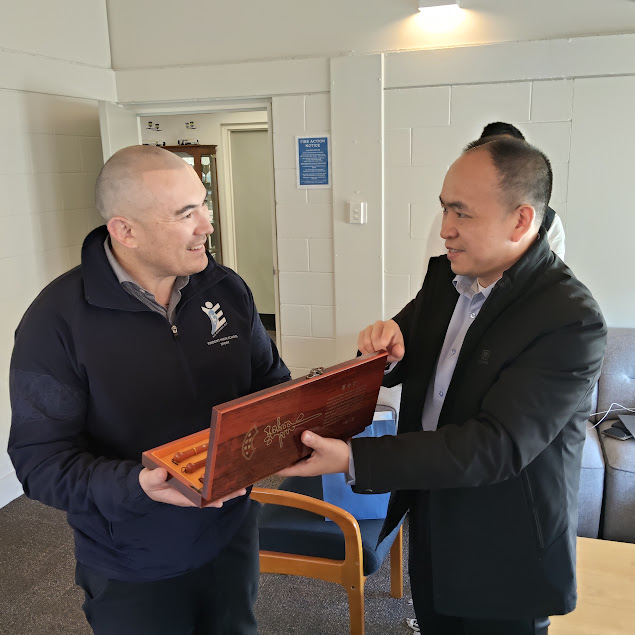
Teachers from Jiangxi Province visiting Trident High School in Whakatāne — one of the sister-school relationships facilitated by Eastern Bridge.
Sister-School Relationships: What They Are and Why They Work
A sister-school relationship is a formal partnership between two schools in different countries. The partnership typically involves regular communication, shared projects, and reciprocal visits by students and teachers. At its best, a sister-school relationship creates a sustained connection between two school communities that goes well beyond a one-off exchange.
Sister-school relationships work because they provide a structured framework for international engagement that is manageable for school leaders. Rather than organising international activities from scratch each year, schools with established sister-school relationships have a ready-made platform for engagement. The relationship provides continuity, shared history, and a growing network of alumni who have participated in exchanges over the years.
Cultural Literacy: The Hidden Curriculum of International Exchange
One of the most important — and often underappreciated — benefits of international education partnerships is the development of cultural literacy. Cultural literacy is the ability to understand, communicate with, and effectively interact with people from different cultural backgrounds. It is a skill that is increasingly valued by employers, universities, and international organisations, but one that is difficult to develop through classroom instruction alone.
International exchange provides an immersive environment in which cultural literacy is developed through direct experience. Students who spend time in a Chinese school learn not just language, but the unspoken rules of Chinese social interaction, the values that underpin Chinese education, and the ways in which Chinese young people understand the world. This experiential learning is qualitatively different from anything that can be taught in a classroom.
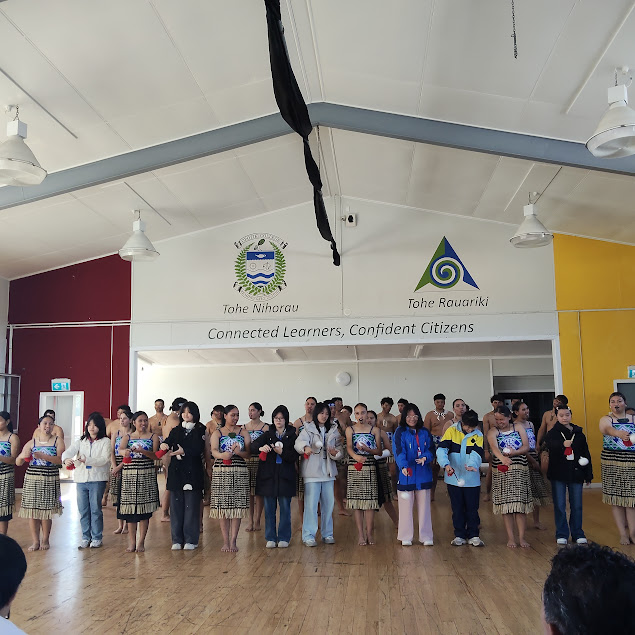
Jiangxi students participating in kapa haka during their visit to New Zealand — cultural exchange at its most direct and memorable.
Student Exchanges: Benefits and Evidence
The research on student exchange programmes is consistently positive. Students who participate in international exchanges show measurable improvements in academic performance, cross-cultural communication skills, and career readiness. They are more likely to pursue international careers, more likely to study additional languages, and more likely to maintain international networks throughout their professional lives.
| Benefit Area | Evidence | Relevance to NZ–China Partnerships |
|---|---|---|
| Academic Performance | Exchange students show improved motivation and academic engagement on return | NZ students returning from China often show renewed interest in language and social studies |
| Cultural Literacy | Direct immersion is the most effective way to develop cross-cultural competence | China's cultural distance from NZ makes immersive exchange particularly valuable |
| Language Development | Immersive environments accelerate language acquisition significantly | Even short visits to China significantly improve Mandarin learners' confidence and fluency |
| Career Readiness | International experience is consistently rated as a top differentiator by NZ employers | China experience is particularly valued given the scale of the bilateral trade relationship |
| Global Citizenship | Exchange participants show higher levels of civic engagement and global awareness | NZ's Asia-Pacific identity makes China literacy a core component of global citizenship |
Sources: Asia New Zealand Foundation, Ministry of Education, Eastern Bridge programme data 2013–2025.
Benefits for Teachers and School Leaders
International partnerships are not only beneficial for students. Teachers and school leaders who participate in exchanges and professional development programmes in China report significant personal and professional benefits. These include exposure to different pedagogical approaches, new perspectives on curriculum design, and the development of international professional networks.
For school leaders, international partnerships also provide strategic benefits. Schools with well-established international programmes are more attractive to prospective students and families, more competitive in the international education market, and better positioned to attract and retain high-quality teaching staff. International engagement is increasingly seen as a marker of educational quality and ambition.
"Every teacher who visits China comes back changed. They see education differently, they understand their Chinese students differently, and they bring a perspective to their classroom that simply cannot be replicated any other way."
Hybrid Exchange Models: Digital and Physical
The COVID-19 pandemic accelerated the development of hybrid exchange models that combine digital and physical engagement. While in-person exchanges remain the gold standard for cultural immersion, digital tools have made it possible for schools to maintain and develop international relationships even when physical travel is not possible.
Hybrid models typically involve a combination of digital collaboration — video calls, shared projects, online cultural exchanges — and periodic in-person visits. This approach makes international engagement more accessible to schools that cannot afford frequent long-haul travel, and it allows relationships to be maintained and deepened between physical visits.
Language Education and the Growing Interest in Mandarin
Language education is another important dimension of New Zealand–China education partnerships. Mandarin Chinese is one of the most widely spoken languages in the world and plays a significant role in global business, diplomacy, and culture. Learning Mandarin can provide students with enhanced career opportunities, deeper understanding of Chinese culture, improved cross-cultural communication skills, and greater engagement with global issues.
However, language learning is most effective when it is connected to real-world experiences. Exchanges, cultural engagement, and interaction with native speakers significantly enhance language learning outcomes. Partnerships with Chinese schools can therefore play a valuable role in supporting language education — giving students a reason to learn and a community to practise with.
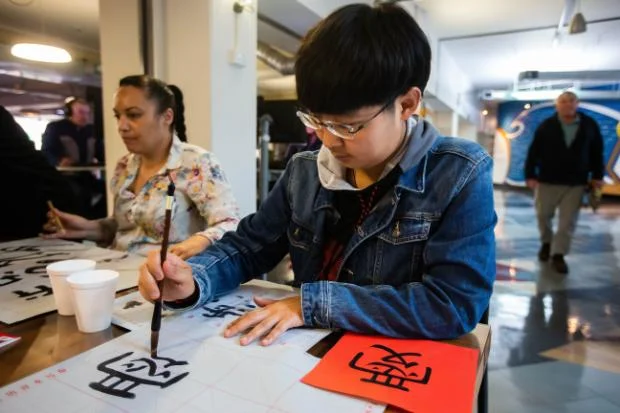
A New Zealand student learning Chinese calligraphy during an exchange visit — language and culture are inseparable in effective international education.
Building Sustainable Education Partnerships
While international engagement offers many benefits, successful partnerships require careful planning and long-term commitment. Schools that build sustainable international partnerships typically focus on five key principles:
Looking Ahead: The Next Phase of Cooperation
The future of New Zealand–China education partnerships will continue to evolve as the global education landscape changes. Several clear trends are already shaping the next phase of cooperation:
"The most successful international partnerships are those that focus on people-to-people connections — students, teachers, and communities learning from each other."
How Eastern Bridge Supports Schools
Eastern Bridge has been facilitating New Zealand–China education partnerships for over a decade. Working with secondary schools, primary schools, and education communities across New Zealand, Eastern Bridge provides a structured, low-risk framework for building genuine international relationships with Chinese partner institutions.
Eastern Bridge manages the complexity of international engagement — partner identification, due diligence, programme design, logistics, cultural preparation, and ongoing relationship management — so that school leaders can focus on educational outcomes rather than administration.
Structured School Partnership Support
Eastern Bridge works with a select number of New Zealand schools each year to establish and develop sister-school relationships with Chinese partner institutions. Services include partner identification and due diligence, programme design, student and teacher exchanges, cultural preparation, and long-term relationship management.
Partnerships are designed to be sustainable, reciprocal, and aligned to each school's educational goals — not a one-size-fits-all programme.
Discuss a Partnership for Your School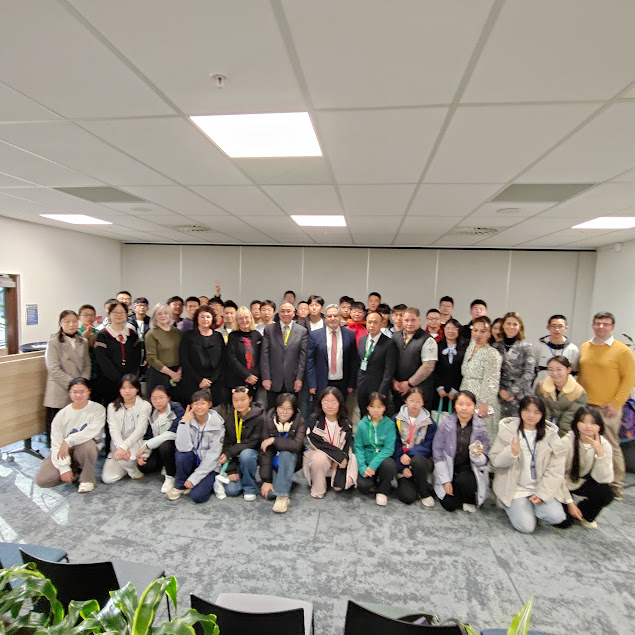
Jiangxi student delegation meeting the Mayor of Whakatāne — Eastern Bridge facilitates connections at every level, from classroom to community leadership.
Conclusion
Education partnerships between New Zealand and China have developed into an important part of the international education landscape. While the environment continues to change, the underlying motivations for cooperation remain strong. Schools in both countries share a commitment to preparing young people for an increasingly interconnected world.
Sister-school relationships, student exchanges, language learning, and collaborative projects all provide opportunities for meaningful engagement. For school leaders, the future of international education is likely to involve more thoughtful, sustainable partnerships that focus on long-term relationships and genuine educational outcomes. When designed carefully, education partnerships can provide students with experiences that broaden their perspectives, strengthen cultural understanding, and prepare them to participate confidently in a global society.
- New Zealand China Council. NZ–China Relationship Dashboard. 2024. nzchinacouncil.org.nz
- Ministry of Education. Education Counts: International Student Enrolments. 2024. educationcounts.govt.nz
- Ministry of Foreign Affairs and Trade (MFAT). New Zealand's relationship with China. mfat.govt.nz
- Ministry of Education. National Languages Strategy update. 2024. education.govt.nz
- New Zealand Chinese Language Week. About Chinese Language Week. chineselanguageweek.co.nz
- Eastern Bridge. Programme data: NZ–China school partnerships 2013–2025. Internal records.
- Asia New Zealand Foundation. New Zealanders' perceptions of Asia. 2024. asianz.org.nz