
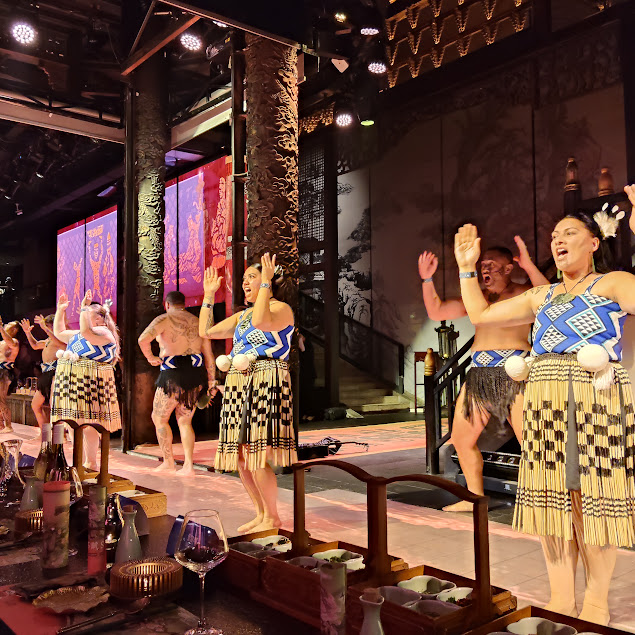
For many New Zealanders, international relationships are still imagined as something handled by Wellington: embassies, trade negotiations, ministerial visits, and formal state-to-state diplomacy. Yet that view is too narrow for the world we now live in, and it is especially too narrow for Māori. Long before the modern New Zealand state existed, Māori were already participating in forms of diplomacy through voyaging, exchange, alliance-building, and political negotiation. In that sense, iwi engagement with the world is not a new departure. It is a continuation of an older tradition, reshaped for contemporary realities.
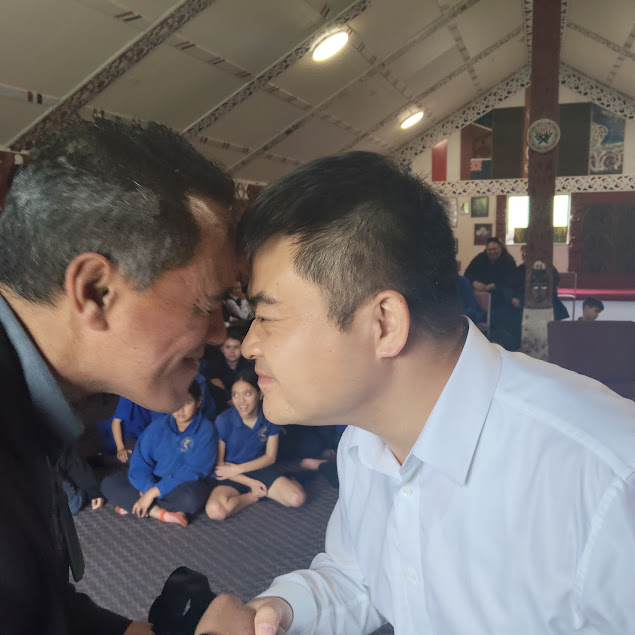
A hongi between Māori and Jiangxi delegates — the kind of people-to-people connection that forms the foundation of lasting international partnership.
Māori International Engagement is Not New
One of the biggest misconceptions in Aotearoa is that Māori international activity is somehow novel, or that Māori participation abroad must be mediated entirely through the Crown. History suggests otherwise.
The signing of He Whakaputanga in 1835 was itself an international act: a declaration of collective political authority by rangatira that was recognised by the British Crown. Te Tiriti o Waitangi in 1840 then established a foundational relationship between Māori and the Crown that still shapes New Zealand's constitutional arrangements. Over the following decades and generations, Māori leaders travelled, petitioned, negotiated, observed, and engaged beyond Aotearoa.
In recent decades, the New Zealand government has increasingly acknowledged that Māori interests are not peripheral to foreign policy. New Zealand's free trade agreements include a Treaty of Waitangi exception clause, and New Zealand formally supported the UN Declaration on the Rights of Indigenous Peoples in 2010. Te Puni Kōkiri records that New Zealand signed an Indigenous Collaboration Arrangement with Canada in 2022, and Māori delegates participated in Te Aratini: Indigenous Peoples Week at Expo 2025 Osaka.
The real question is not whether Māori diplomacy is happening. It is whether it will remain mostly consultative and occasional, or whether it will become more grounded, strategic, and community-owned.
Simon Appleton, Eastern Bridge
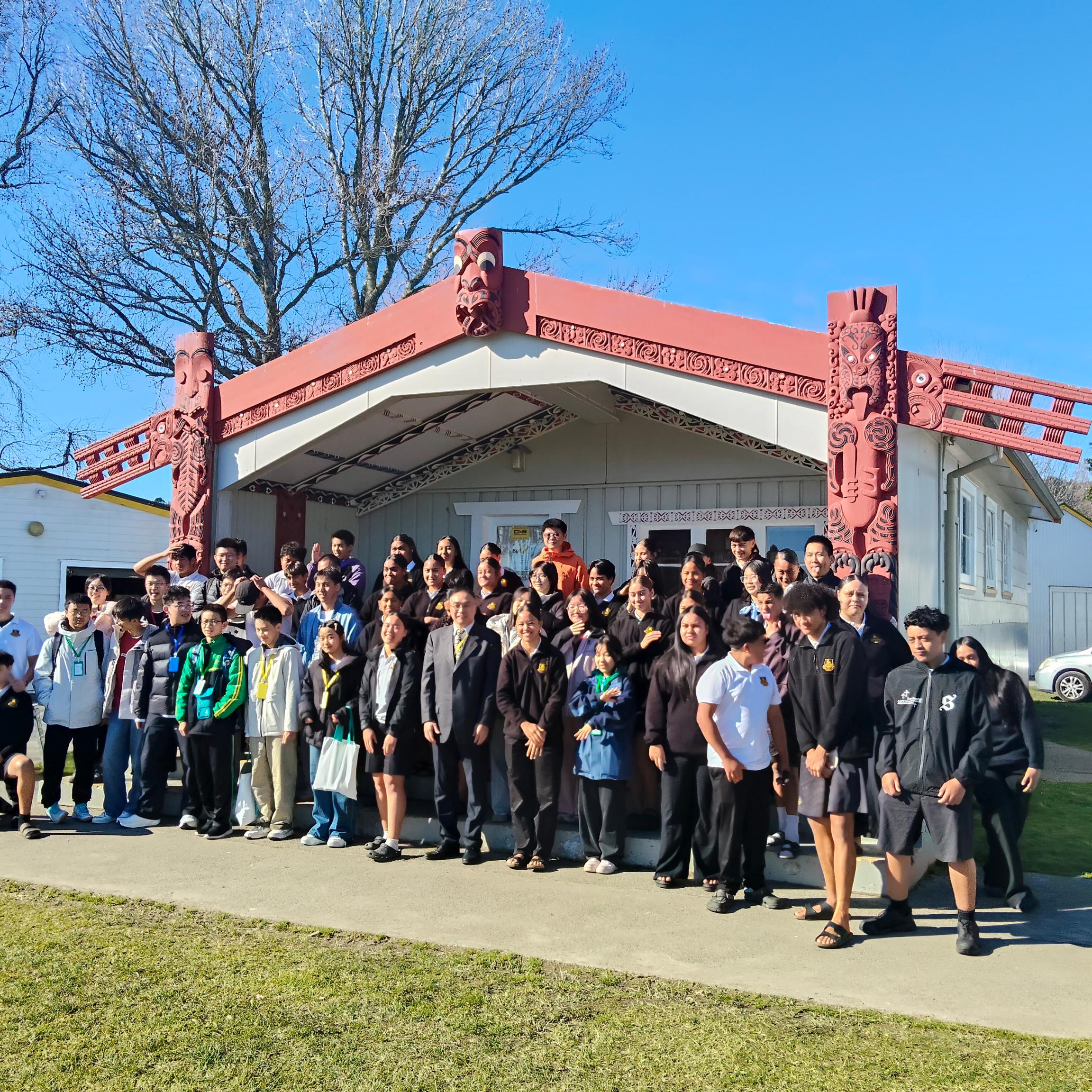
Māori and Chinese community members at a marae — people-to-people relationships built on genuine cultural exchange.
Why Sister-City Diplomacy Needs an Indigenous Evolution
New Zealand's sister-city and sister-province relationships have usually been led by local governments. That made sense historically. Councils are stable institutions. They can sign memoranda, host delegations, and maintain international contacts over time. But the conventional sister-city model has limitations. It tends to reflect local government structures rather than the full social and constitutional reality of the communities involved.
In Aotearoa, that means many relationships have been built as if councils alone are the legitimate community voice. That is not an accurate reflection of Te Tiriti, of Māori economic development, or of the role iwi and hapū play in place-based leadership.
An iwi–city or iwi–province relationship would not replace sister cities. It would deepen them. Iwi are enduring collectivities with their own governance, intergenerational responsibilities, cultural authority, and economic assets. Chinese counterparts also tend to take institutions seriously — they place value on continuity, mandate, and social embeddedness. An iwi that comes to the table with a clear mandate and a long-term strategy will often be seen not as an add-on, but as a credible partner.
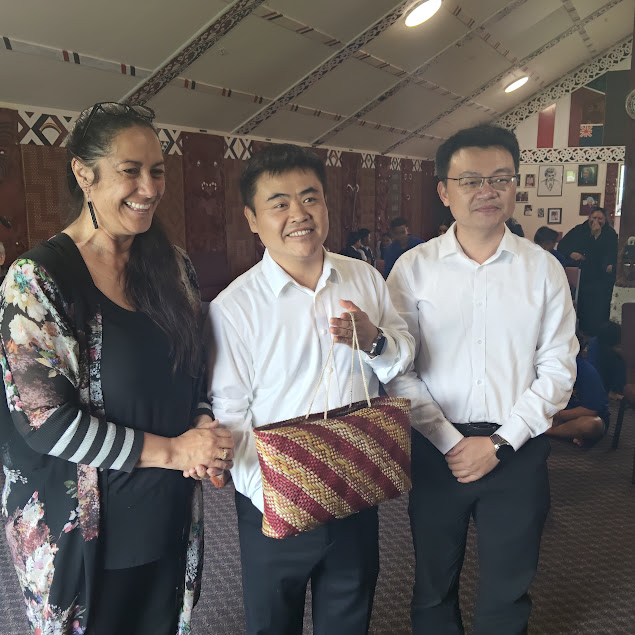
An iwi meeting with a Jiangxi delegation — an early example of the kind of direct institutional engagement that could become formalised.
Why China is a Particularly Important Partner for Iwi
China is not just another market. It is a civilisational partner with whom New Zealand has developed an unusually dense web of local, educational, commercial, and people-to-people links. For iwi and hapū, China offers an especially compelling partnership environment for several reasons.
First, Chinese political and social culture tends to value long-term relationships over purely transactional engagements. This aligns more naturally with Māori concepts such as whanaungatanga, reciprocity, and intergenerational thinking than some Western commercial models do. Second, Chinese society places strong emphasis on ancestry, collective identity, family continuity, and the moral obligations that flow through relationships — all of which find meaningful parallels in Māori thought. Third, China's scale means city-level relationships matter enormously, opening doors to education, tourism, cultural exchange, environmental cooperation, and trade access simultaneously.
Cultural Resonances: Useful, But to Be Handled Carefully
There is a temptation, when advocating Māori–China engagement, to overstate cultural similarity. That should be avoided. Māori and Chinese societies are not the same. Their cosmologies, political histories, languages, kinship systems, and legal traditions are different. Superficial claims of sameness are not respectful.
What is more useful is to identify resonances — areas where the two worlds speak productively to one another without being collapsed into false equivalence.
| Māori Concept | Chinese Parallel | Shared Dimension | Important Distinction |
|---|---|---|---|
| Whanaungatanga | Guanxi (关系) | Relationships as the foundation of trust and cooperation; obligations flow through connection | Guanxi operates within hierarchical networks; whanaungatanga is more horizontally kinship-based |
| Manaakitanga | Mianzi / Face (面子) | Hospitality, respect, and the social importance of how others are treated publicly | Mianzi is closely tied to social status and hierarchy; manaakitanga is more universally applied |
| Kaitiakitanga | Ecological Civilisation (生态文明) | Responsibility to the natural world as a moral and intergenerational obligation | Ecological Civilisation is a state policy framework; kaitiakitanga is a cosmological and spiritual relationship |
| Whakapapa | Lineage & Ancestry (宗族) | Ancestry as living, socially meaningful, and identity-defining; the past shapes the present | Chinese lineage traditions are patrilineal and tied to clan structures; whakapapa encompasses all lines |
| Tikanga | Li (礼) — Ritual Propriety | Protocol, ceremony, and correct conduct as expressions of respect and social order | Li is a Confucian philosophical concept; tikanga is a living legal and cultural system |
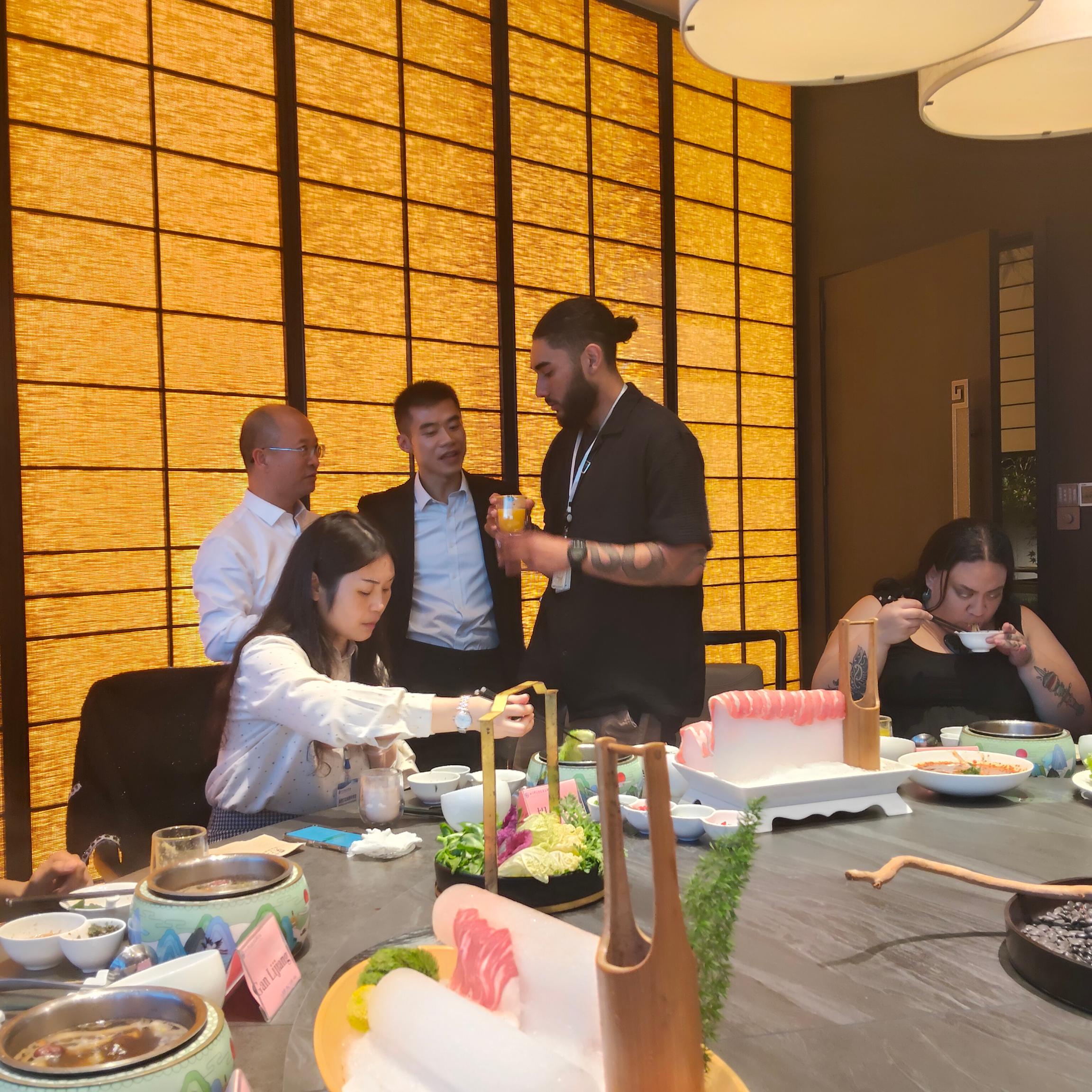
A shared banquet toast — where whanaungatanga meets guanxi. These moments of genuine connection are the foundation of lasting international partnerships.
The Constitutional and Strategic Argument
There is also a constitutional argument for iwi and hapū to develop their own partnerships. Te Tiriti established a relationship between Māori and the Crown, not an arrangement in which Māori identity would disappear into the institutions of local government. Over time, iwi have rebuilt governance capacity, secured settlements, developed substantial economic entities, and strengthened their role in education, social delivery, environmental stewardship, and regional development.
If that is true domestically, then it should also be true internationally. A mature Treaty-based society ought to be able to imagine foreign engagement that includes Māori institutions as active participants in their own right.
New Zealand's international brand is strongest when it is distinctive
Māori identity is one of the most distinctive dimensions of New Zealand's presence in the world. But Māori should not appear internationally only as performance, symbolism, or welcome ritual for state-led projects. A stronger model is one in which Māori entities define, lead, and benefit from partnership activity themselves.
What Iwi–City Relationships in China Could Actually Look Like
The strongest case for iwi–city links is practical rather than theoretical. These relationships can produce real work across five distinct opportunity areas.
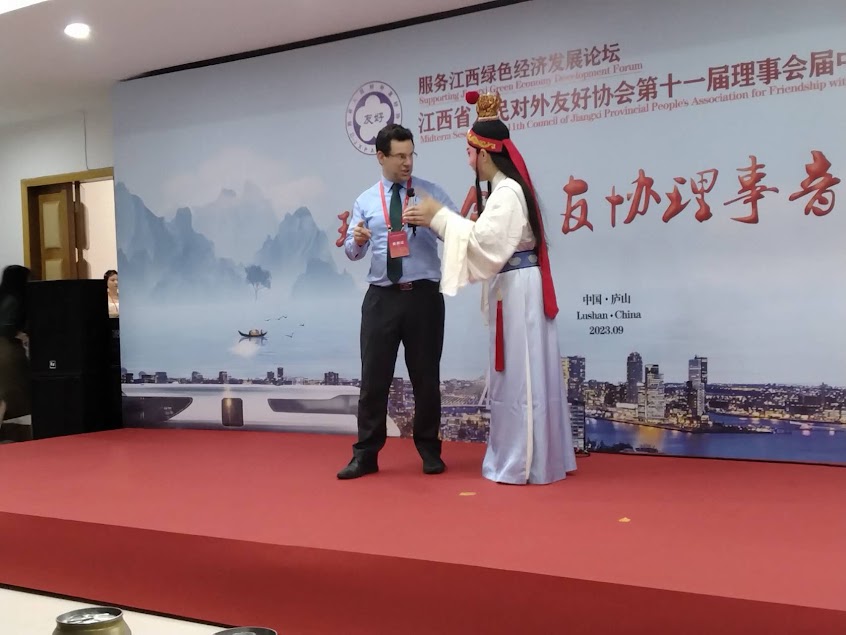
Cultural exchange in action — the kind of genuine, values-rich engagement that distinguishes iwi-led partnerships from conventional diplomatic activity.
Why Iwi and Hapū Should Not Leave This Work to Others
Councils have their own mandates and political pressures. Central government has national priorities that may shift. Universities, businesses, and agencies pursue their own institutional interests. None of that is wrong. But none of it substitutes for iwi defining their own international objectives.
If iwi do not build direct partnerships, they may still appear in international activity, but often only as guests, performers, consultees, or symbolic participants. That is not the same as being an architect of the relationship.
Direct partnership changes the balance. It allows iwi and hapū to decide what outcomes matter, who should be involved, how tikanga is upheld, what economic opportunities are acceptable, and how benefits flow back into the community. Real partnership is cumulative — it grows through repeated contact, institutional memory, and shared work.
Risks and Cautions
None of this should be romanticised. Iwi–China partnerships will only succeed if they are approached with realism. Four key risks must be acknowledged and managed from the outset.
| Risk | What It Looks Like | How to Mitigate It |
|---|---|---|
| Tokenism | Chinese counterparts treat Māori participation as symbolic rather than structural — a cultural performance rather than an institutional relationship | Address early through clear frameworks, defined work programmes, and proper recognition of mandate and governance authority |
| Internal Overstretch | International engagement takes time, money, and skilled coordination — not every iwi will have the capacity or desire for a China strategy | Work through wider regional or collective frameworks where appropriate; not every iwi needs its own bilateral relationship |
| Cultural Misunderstanding | Superficial similarities between Māori and Chinese values mask real differences in language, protocol, hierarchy, decision-making pace, and institutional expectations | Invest in cross-cultural literacy; use experienced intermediaries; do not assume resonance means equivalence |
| Governance Failure | International partnerships become the private project of a few enthusiastic individuals rather than accountable to whānau and hapū | Ensure mandate, transparency, and fit with wider iwi priorities; build formal accountability mechanisms from the start |
The Path Forward: A Staged Approach
The next step is not for every iwi to rush out and sign agreements. The next step is strategic preparation. Iwi and hapū interested in China should begin by asking foundational questions: What do we want from an international partnership? Which city or province is the right fit? What strengths do we bring? What governance mechanism will hold the relationship? How will we ensure benefits come back to the people?
From there, a staged approach makes sense.
Conclusion: A Case for Confidence
The case for iwi and hapū to develop their own partnerships in China is ultimately a case for confidence. Confidence that Māori international engagement is not an invention of the present, but a continuation of a long historical tradition. Confidence that iwi have the institutional maturity to operate internationally on their own terms. Confidence that relationships built through tikanga, whanaungatanga, and long-term reciprocity can thrive in China's relationship-oriented environment.
In the work Eastern Bridge has been developing around the Jiangxi relationship, there is already a strong foundation for this kind of model — not iwi as an afterthought to a council relationship, but iwi as equal participants with the potential to develop their own direct links to cities in China. That is a significant evolution in the New Zealand sister-city space, and it points toward something larger: a future in which Māori international engagement is normal, structured, and self-defined.
If sister-city relationships were the first phase of community diplomacy, then iwi–city relationships may be the next phase. That would be good for Māori. It would be good for local communities. And, handled properly, it would be good for New Zealand's relationship with China as well.
Aotearoa's future international relationships will be stronger when they reflect the full reality of this country — including its Indigenous foundations.
Simon Appleton, Eastern Bridge
Supporting Iwi & Hapū International Engagement
Eastern Bridge has over a decade of experience facilitating Māori–China relationships, including iwi delegations to Jiangxi, cultural exchange programmes, and governance frameworks for community-led international partnerships. We work with iwi to design engagement that is tikanga-led, strategically sound, and accountable to the people it serves.
- Te Puni Kōkiri. (2022). Indigenous Collaboration Arrangement between New Zealand and Canada. Wellington: Te Puni Kōkiri.
- Ministry of Foreign Affairs and Trade. (2023). Treaty of Waitangi Exception Clause in New Zealand Free Trade Agreements. Wellington: MFAT.
- United Nations. (2007). Declaration on the Rights of Indigenous Peoples. New York: United Nations.
- New Zealand Government. (2010). New Zealand's Support for the UN Declaration on the Rights of Indigenous Peoples. Wellington.
- Expo 2025 Osaka. (2025). Te Aratini: Indigenous Peoples Week Programme. Osaka: Expo 2025.
- Hofstede Insights. (2024). Country Comparison: New Zealand and China. Retrieved from hofstede-insights.com.
- Eastern Bridge. (2024). Jiangxi–Bay of Plenty Sister Province Relationship: Programme Overview. Whakatāne: Eastern Bridge.