
Eastern Bay Councils Back Jiangxi Sister Province Plan
In December 2018, Eastern Bridge presented a strategic framework to the Eastern Bay of Plenty Joint Committee for a sister province relationship with Jiangxi, China. Aimed at boosting regional tourism, investment, and youth opportunities, the proposal won unanimous support from the mayors of Ōpōtiki, Whakatāne, and Kawerau, who passed a motion to formalize the groundbreaking partnership.
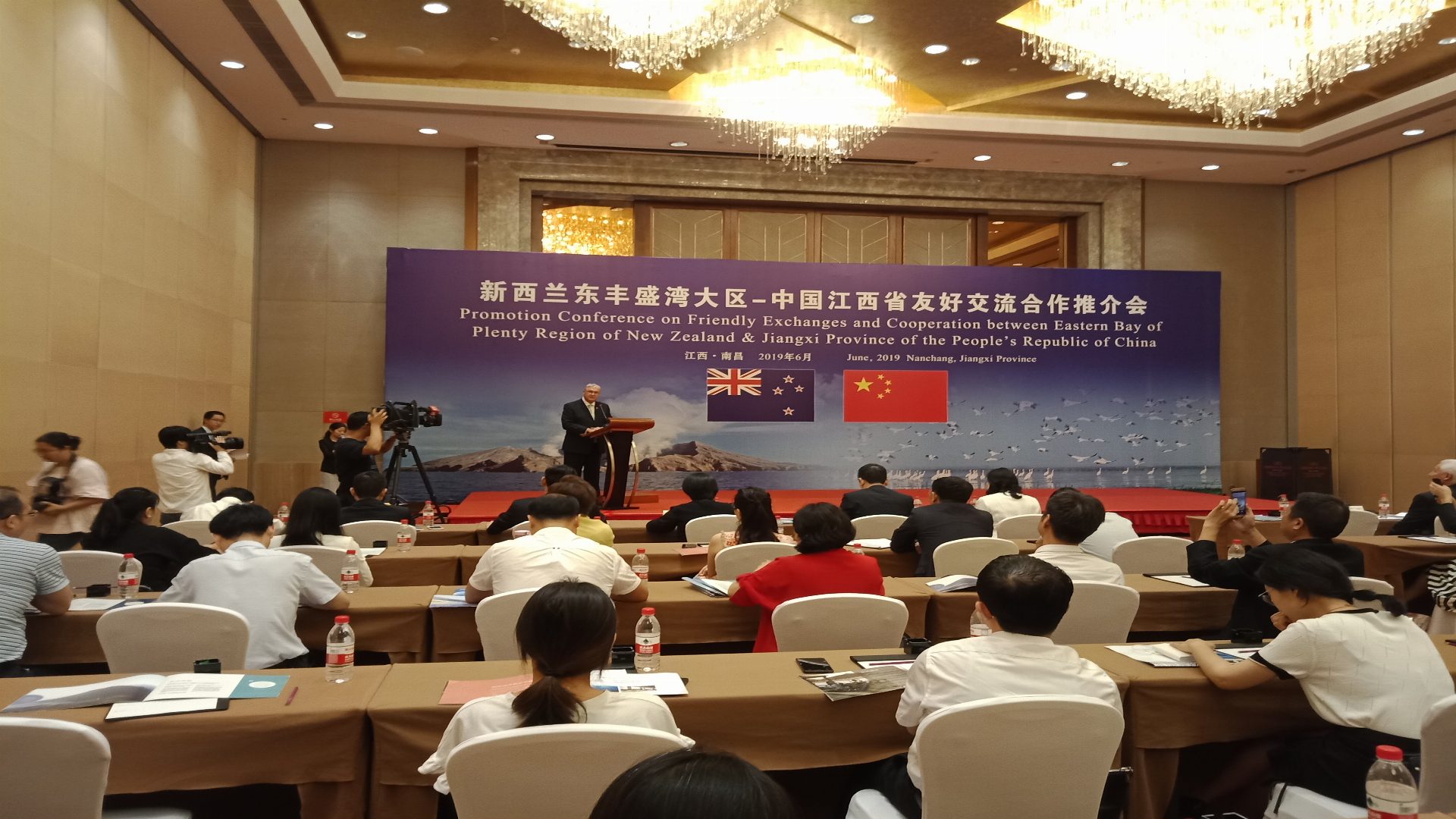
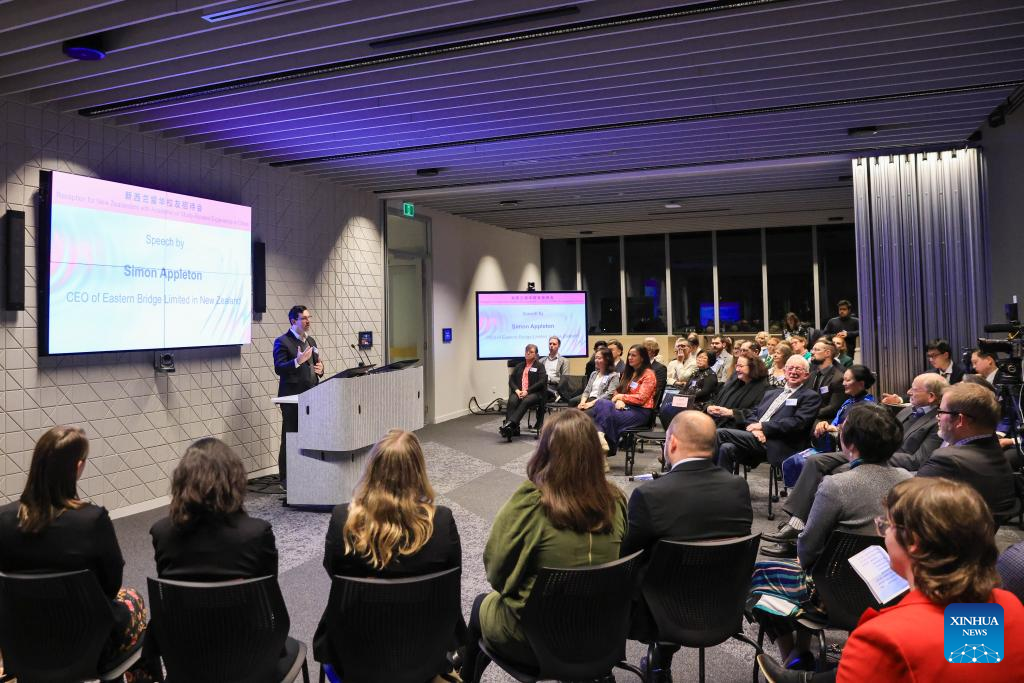
On 12 November 2018, Simon Appleton of Eastern Bridge Limited presented a strategic proposal to the Eastern Bay of Plenty Joint Committee, chaired by Mayor John Forbes of the Ōpōtiki District Council. The presentation outlined a cooperative framework for establishing a formal sister province relationship between the Eastern Bay of Plenty and Jiangxi Province, one of China's most dynamic inland provinces.
The Joint Committee — comprising the mayors and representatives of the Ōpōtiki District Council, Whakatāne District Council, and Kawerau District Council, alongside Bay of Plenty Regional Council — received the proposal with considerable interest. Eastern Bridge provided background on Jiangxi's geography, economy, and international profile, before introducing the tiered partnership model it had developed.
The Proposed Framework
The framework Eastern Bridge presented was designed to be both practical and scalable. At its core was a tiered structure: each of the three Eastern Bay of Plenty district councils would establish a direct sister city relationship with a partner city within Jiangxi Province, while the Eastern Bay of Plenty Joint Committee itself would maintain an overarching relationship with the Jiangxi Provincial Government's Department of Foreign Affairs.
This approach was deliberately modelled on successful sister province arrangements elsewhere in New Zealand, where the combination of city-level and provincial-level ties creates multiple channels for exchange — in trade, education, tourism, and cultural diplomacy. Eastern Bridge argued that the Eastern Bay of Plenty's relatively small population should not be seen as a barrier; rather, its cohesive identity and strong primary sector made it an attractive partner for a province of Jiangxi's scale and ambition.
"China is New Zealand's most important trading partner, and small districts like ours cannot afford to be globally unaware. These international connections generate real, positive social and economic benefits for our communities."
— Mayor John Forbes, Ōpōtiki District Council
Mayoral Responses
All three mayors present at the meeting expressed support for the initiative. Mayor John Forbes of Ōpōtiki, who chaired the session, spoke about the importance of China to New Zealand's economic future and the need for even small districts to be internationally connected. He emphasised that such relationships are not merely symbolic — they generate tangible benefits for local businesses, schools, and communities.
Mayor Tony Bonne of Whakatāne expressed particular enthusiasm for the tourism potential of a Jiangxi partnership. With the Eastern Bay of Plenty home to some of New Zealand's most spectacular natural landscapes — including Whakaari/White Island and the Ōhiwa Harbour — Mayor Bonne saw a direct opportunity to attract Chinese visitors to a region that remains relatively undiscovered by international tourism markets.
Mayor Malcolm Campbell of Kawerau highlighted two further dimensions: the potential to attract Chinese investment into the district's industrial and forestry sectors, and the opportunity to provide young people from the Eastern Bay with meaningful experiences in China. He noted that exchange programmes and youth travel opportunities can have a lasting impact on the outlook and career prospects of young New Zealanders from provincial communities.
The Motion Passed
Following discussion, the Joint Committee passed a motion directing Eastern Bridge to draft a Memorandum of Understanding (MOU) and to develop a detailed plan for progressing the Jiangxi relationship. This was a significant step: it gave Eastern Bridge a formal mandate from all three district councils and the Bay of Plenty Regional Council to act as the facilitating organisation for what would become one of New Zealand's most active provincial-level China partnerships.
The MOU process would take several months to complete, involving consultation with the Jiangxi Provincial Government's foreign affairs department and coordination across the three councils. The relationship was formally established in 2019, with sister city pairings between Ōpōtiki and Jiujiang, Whakatāne and Xinyu, and Kawerau and Fengcheng.
Background: Jiangxi Province in 2018
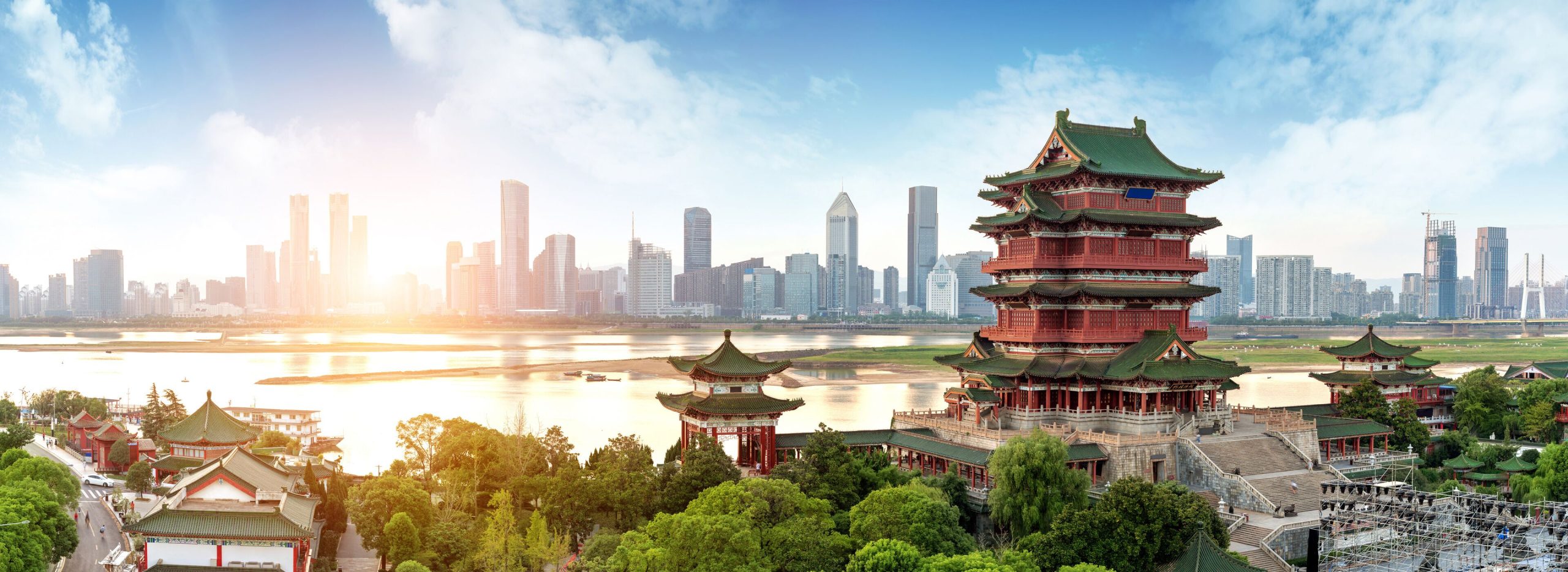
For many New Zealanders, Jiangxi remains an unfamiliar name — yet it is one of China's most historically significant and economically dynamic provinces. Located in east-central China, Jiangxi borders six provinces including Zhejiang, Fujian, Guangdong, and Hunan. Its capital, Nanchang, is a major metropolis and the site of the 1927 Nanchang Uprising, which marked the founding of the People's Liberation Army.
By 2018, Jiangxi had a population of approximately 45.19 million people — roughly nine times the entire population of New Zealand — and a per capita GDP of over 47,000 yuan (approximately NZD $10,000). The province had sustained an average annual GDP growth rate of 8.7 percent since 2012, outperforming the national average and positioning itself as one of China's fastest-growing inland provinces.
| Indicator | Jiangxi (2018) | Context |
|---|---|---|
| Population | ~45.19 million | Approx. 9× New Zealand's population |
| Per Capita GDP | CNY 47,000+ (~NZD $10,000) | Growing at ~8.7% p.a. since 2012 |
| Capital City | Nanchang | Major commercial and industrial hub |
| Area | 166,900 km² | Comparable in size to the North Island |
| Forest Coverage | 63% | One of China's greenest provinces |
| Key Industries | Copper mining, electronics, VR, agriculture | World's largest copper smelting base at Guixi |
| Tourism | Mount Lu (UNESCO), Jingdezhen porcelain | Rapidly growing domestic and international tourism |
Jiangxi is also notable for its environmental credentials. With 63 percent forest coverage, it is one of China's greenest provinces, and its ecological development strategy has made it a model for sustainable growth. The province is home to Poyang Lake — China's largest freshwater lake — as well as Mount Lu (Lushan), a UNESCO World Heritage Site and one of China's most celebrated cultural landscapes.
Jingdezhen, a city within Jiangxi, has been the centre of Chinese porcelain production for over a thousand years and remains a globally recognised centre of ceramic art. These cultural assets, combined with Jiangxi's growing e-commerce and virtual reality industries, made it an increasingly attractive destination for international partnerships in 2018.
Looking Ahead
The December 2018 Joint Committee meeting marked the beginning of a relationship that would grow significantly in the years that followed. Eastern Bridge's role as facilitator — connecting local government, iwi, schools, businesses, and community organisations across the Eastern Bay of Plenty with their counterparts in Jiangxi — has since produced student exchanges, delegation visits, trade introductions, and cultural programmes that have benefited communities on both sides.
For Eastern Bridge, the mandate received at that meeting was a validation of years of relationship-building in Jiangxi and a recognition that even small provincial communities in New Zealand have much to gain — and much to offer — through well-structured international partnerships with China.