
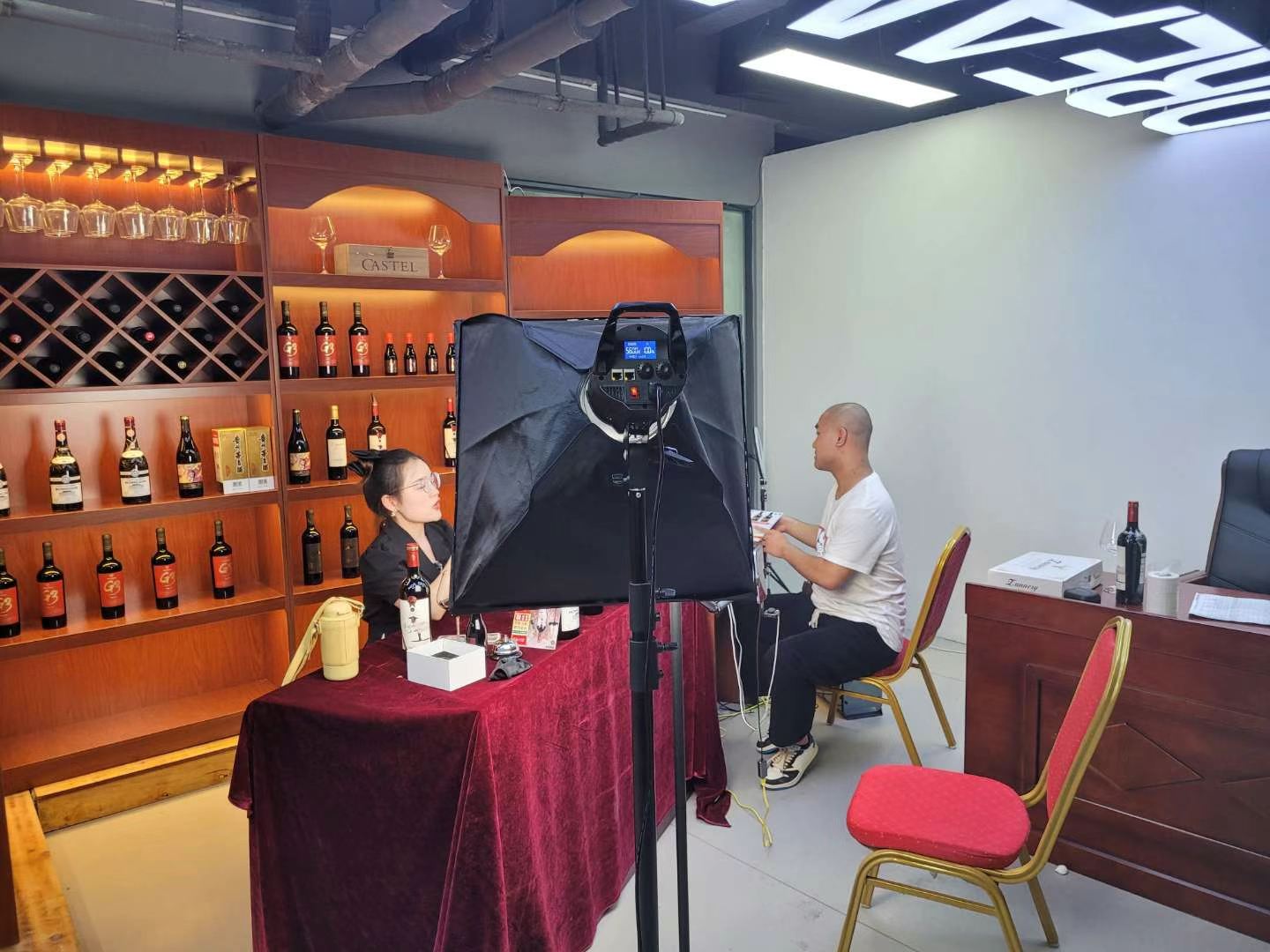
For many New Zealand food and beverage companies, China represents both an enormous opportunity and a complex challenge. This case study explores the experience of Andrew, the founder of a small Hawke's Bay wine company. Over five years, his journey from failed trade show meetings to a stable Chinese distribution partnership illustrates a truth that many exporters learn the hard way: success in China is not determined by product quality alone. It is determined by cultural intelligence.
Background
Andrew founded his winery in the early 2010s in a well-known New Zealand wine region. The company produced small-batch premium wines that had gained a loyal following domestically and modest export sales to Australia and the United Kingdom. By 2018, Andrew began exploring new markets. China was an obvious option.
Several factors attracted him: China's rapidly expanding middle class, growing demand for premium imported wine, the New Zealand–China Free Trade Agreement which had reduced tariffs on many agricultural exports, and rising consumer interest in lifestyle products associated with health, nature, and authenticity.
Andrew initially believed that if Chinese consumers could taste the quality of his wine, success would follow naturally. What he quickly discovered was that product quality alone was not enough.
Early Attempts and Cultural Missteps
Andrew's first attempt to enter China followed a familiar path for many small exporters. He attended an international trade show in Shanghai and met several potential distributors. The meetings were polite and positive. The Chinese distributors complimented his wine and expressed interest in cooperation.
Andrew returned to New Zealand encouraged by the response. He expected to receive purchase orders within weeks. Nothing happened. Emails went unanswered. Follow-ups produced polite but vague replies.
At the time, Andrew interpreted these responses literally. In a New Zealand context, phrases like "maybe" or "let's discuss later" often imply genuine interest. In Chinese business culture, however, communication tends to be high-context and indirect. A phrase such as "we will think about it" often functions as a polite way of declining without causing embarrassment — a way of preserving face (面子) for both parties.
Andrew later realised that he had misunderstood the signals entirely. His potential partners had likely decided against the deal early on, but avoided saying "no" directly.
Learning the Importance of Guanxi
After several unsuccessful attempts, Andrew was introduced to a New Zealand trade advisor who had spent many years working in China. The advisor explained a concept that would change Andrew's entire approach to the market.
Andrew realised that during his first trip to China he had made a common mistake: he had focused immediately on sales. The Chinese distributors had expected more time spent building rapport — shared meals, conversations about family and business background, and mutual introductions. The advisor suggested that Andrew return to China and approach the market entirely differently.
Developing Cross-Cultural Literacy
Andrew decided to take the advice seriously. Instead of rushing back to trade shows, he began investing time in understanding Chinese culture and communication. He undertook three deliberate steps:
-
1
Cultural Training
Andrew attended cross-cultural business workshops exploring the differences between Chinese and New Zealand business norms. He learned that China scores much higher on power distance — meaning hierarchy and seniority are strongly respected. New Zealand, by contrast, has one of the most egalitarian business cultures in the world. In practice, this meant paying closer attention to organisational hierarchy when meeting Chinese partners. The most senior person in the room was often the key decision maker, and addressing them appropriately mattered.
-
2
Basic Mandarin Language
Andrew began studying Mandarin. While he did not aim to become fluent, learning simple phrases — Nǐ hǎo (你好, hello), Xièxiè (谢谢, thank you), and Hěn gāoxìng rènshi nín (很高兴认识您, nice to meet you) — helped establish goodwill immediately. He also learned that addressing business partners formally, using surname and title, demonstrated respect that was noticed and appreciated.
-
3
Understanding Face and Communication Style
In New Zealand, business communication is typically direct and informal. Feedback is often delivered openly and meetings move quickly toward decisions. Chinese communication, however, tends to be more indirect. Andrew learned to recognise that phrases such as "maybe", "we will consider it", and "it may be difficult" often signal disagreement or hesitation — not genuine openness. Recognising these cues became essential in interpreting meetings correctly and avoiding wasted follow-up effort.

Returning to China
Two years after his first unsuccessful attempt, Andrew returned to China with a different mindset. This time his schedule included fewer formal presentations and more relationship-focused activities. A Chinese friend helped arrange introductions to a small regional distributor in Zhejiang Province.
Rather than immediately discussing contracts, the first evening was spent at dinner. The meal lasted several hours. Toasts were exchanged. Stories about family, business, and travel were shared.
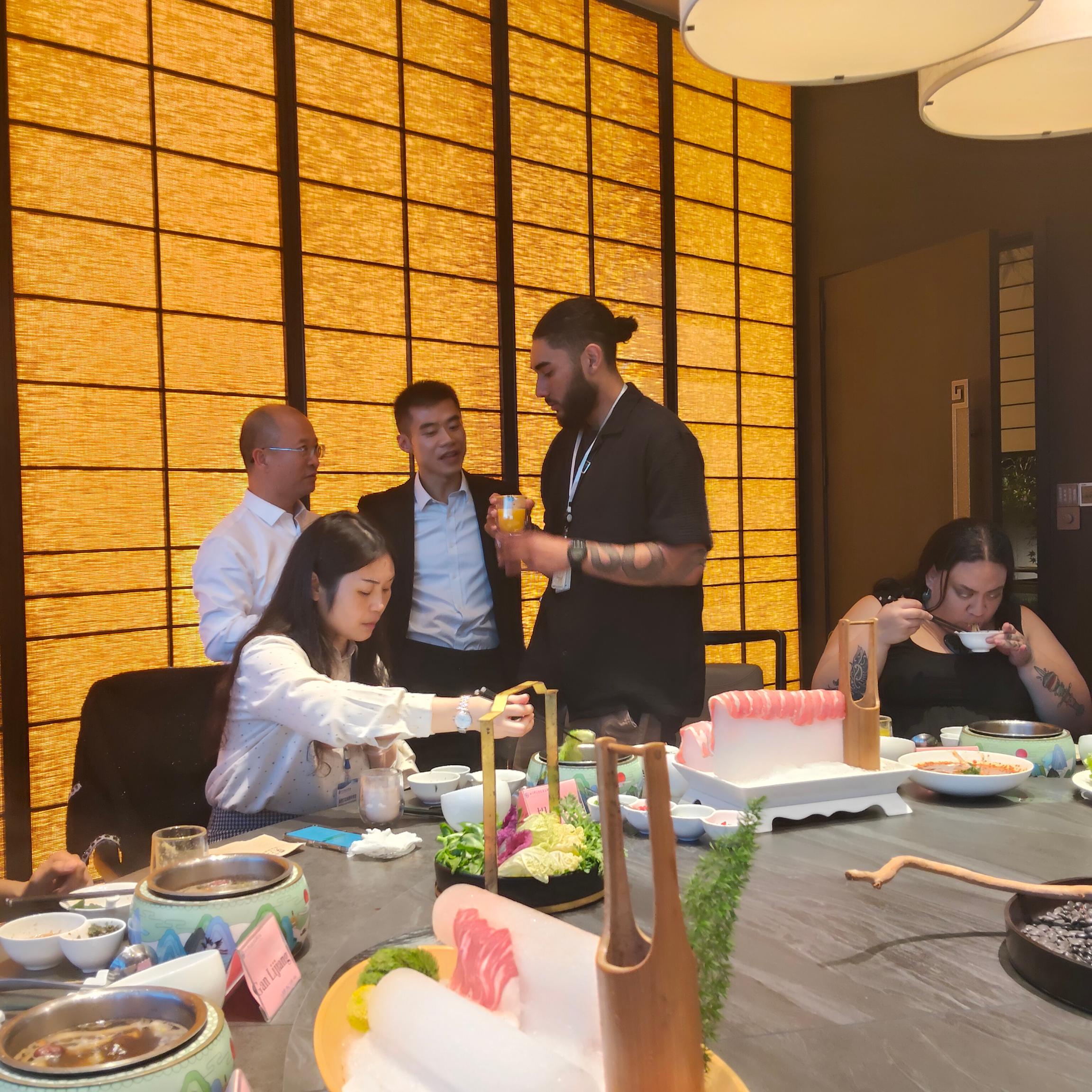
"No business was discussed in detail that evening. Yet the dinner proved far more important than any trade show meeting. By the end of the evening, the distributor had a sense of Andrew as a person, not just a supplier. This was the beginning of guanxi."
The Role of Trust and Patience
Over the following year, Andrew visited China several times. Each trip involved meeting the distributor and their colleagues, visiting restaurants and wine retailers together, hosting tasting events for potential customers, and attending banquets with local business contacts. Progress felt slow by New Zealand standards.
However, in Chinese business culture, relationships are often viewed as long-term investments. Trust develops gradually. Eventually the distributor agreed to place a modest initial order. The volume was small compared to Andrew's expectations, but it represented an important milestone: the transition from relationship building to commercial cooperation.
Adapting the Product and Marketing
Another lesson Andrew learned was that exporting a product successfully often requires localisation. His original wine labels and marketing materials were designed for Western markets. In China this created several problems: English-only labels limited consumer understanding, brand stories referencing local New Zealand locations were unfamiliar to Chinese buyers, and retail staff lacked Chinese-language product information.
Working with his distributor, Andrew made several adjustments: Chinese-language labels and product descriptions, marketing materials explaining New Zealand's clean environment and wine-making traditions, and social media promotion through Chinese platforms such as WeChat. These changes helped consumers connect the wine with the broader story of New Zealand as a natural and trusted food producer.
Cultural Differences in Negotiation
Andrew also noticed significant differences in negotiation style. In New Zealand, business meetings often focus on efficiency and clear agreements. Chinese negotiations frequently involve longer discussions, multiple meetings, and occasional revisions to earlier understandings. At first Andrew found this frustrating. However, he gradually realised that flexibility was part of maintaining the relationship. Demonstrating patience and willingness to adapt signalled respect for the partnership — and helped strengthen trust with the distributor and their network of retailers.
| Dimension | New Zealand | China |
|---|---|---|
| Communication Style | Direct, low-context — meaning is stated explicitly | Indirect, high-context — meaning is often implied |
| Relationship vs Transaction | Transactions can begin quickly; contracts establish trust | Relationships must be established before transactions progress |
| Hierarchy | Egalitarian; flat structures; first-name basis common | Hierarchical; seniority respected; formal titles expected |
| Negotiation Pace | Efficient; decisions made quickly; clear agreements preferred | Deliberate; multiple meetings; flexibility and patience valued |
| Saying "No" | Direct refusal is acceptable and expected | Indirect refusal preserves face — "maybe" often means no |
| Time Horizon | Short-to-medium term; quick return on investment expected | Long-term orientation; relationships are multi-year investments |
Business Outcomes
Five years after his first attempt to enter China, Andrew's winery had established a stable presence in several Chinese cities. While China did not become his largest export market, it became one of his most strategically important. The results included a long-term distribution partnership in eastern China, regular participation in Chinese wine exhibitions, and growing recognition of the brand among Chinese consumers interested in premium imported wine.
Perhaps more importantly, Andrew developed a deeper understanding of international business. He often reflected that the most valuable lesson was not about wine at all. It was about culture.
"The most valuable lesson was not about wine at all. It was about culture. Success in China required learning how to build relationships, communicate across cultures, and adapt to a very different way of doing business."
How Eastern Bridge Supports Exporters
Andrew's experience is not unusual. Many New Zealand companies enter the Chinese market with strong products and genuine ambition, but without the cultural knowledge needed to navigate the relationship-first business environment. Eastern Bridge works with New Zealand businesses, councils, and organisations to build the cultural intelligence and in-country relationships that make China engagement sustainable.
Cross-Cultural Preparation for China Engagement
Eastern Bridge provides structured support for New Zealand businesses entering or deepening their engagement with China. Services include cross-cultural business briefings, partner identification and due diligence, in-country relationship facilitation, and market entry strategy support. All services are designed to reduce risk and accelerate the trust-building process that underpins successful China partnerships.
Discuss Your China Strategy- Hofstede Insights. Country Comparison: New Zealand and China. hofstede-insights.com
- New Zealand China Council. NZ–China Trade Relationship. 2024. nzchinacouncil.org.nz
- Ministry of Foreign Affairs and Trade. New Zealand–China Free Trade Agreement. mfat.govt.nz
- Meyer, E. The Culture Map: Breaking Through the Invisible Boundaries of Global Business. PublicAffairs, 2014.
- Luo, Y. Guanxi and Business. World Scientific, 2007.
- New Zealand Trade and Enterprise (NZTE). Doing Business in China. nzte.govt.nz
- Eastern Bridge. Programme data: NZ–China business engagement 2013–2025. Internal records.