
A Collectively Governed Platform for Community, Youth and Economic Development
A structured provincial engagement model enabling New Zealand local governments, iwi, schools and community institutions to engage with Jiangxi Province, China — in a disciplined, low-risk and scalable manner.
The Framework
What Is the Jiangxi Cooperative Framework?
The Framework exists because of structural asymmetry. No individual New Zealand council has the scale, internal resource or sustained international capability to independently engage a jurisdiction of 45 million people in a consistent and meaningful way.
The Cooperative Framework addresses this imbalance through collective structure. It allows participating New Zealand entities to aggregate scale while retaining full local autonomy. It reduces duplication of effort, increases institutional credibility in Jiangxi, and enables structured programme development across youth, education, community and economic domains.
The Framework is deliberately staged and governance-driven. Eastern Bridge provides programme leadership and operational continuity — separating governance from delivery, which is central to the Framework's integrity.
Who Can Participate
Key Stakeholders in New Zealand
The Framework is deliberately multi-stakeholder in design. It recognises that durable international relationships are not sustained by councils alone, but by interconnected institutions across communities.
Local Government
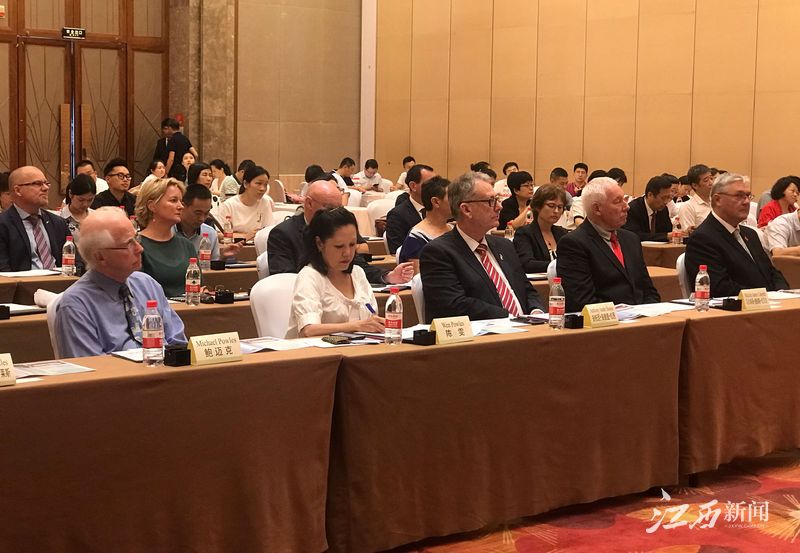
For local governments, the Framework provides a structured vehicle to support regional development priorities. Councils participate to strengthen education pipelines, support tourism flows, facilitate sector-specific dialogue, and provide youth mobility opportunities for their communities.
Importantly, councils retain full mandate authority. The Framework does not override existing sister city relationships; rather, it strengthens them by embedding them within a coordinated provincial architecture.
- Full local autonomy preserved — no override of existing agreements
- Increased provincial credibility through collective scale
- Structured vehicle for regional development priorities
- Youth mobility and education pipeline support
- Sector-specific dialogue facilitation
Iwi & Hapū
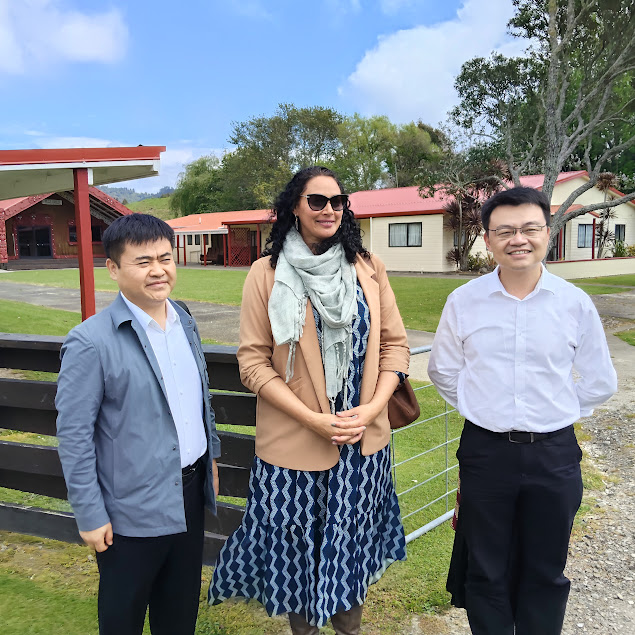
The Framework recognises iwi as autonomous governance entities operating under Te Tiriti o Waitangi principles. Iwi participation is not symbolic. It enables direct iwi-to-city relationships, rangatahi exchange pathways, cultural diplomacy, and where appropriate, enterprise dialogue.
The Cooperative model ensures iwi are not subordinated within council-led structures. Participation is voluntary, sovereign, and locally controlled.
- Recognised as autonomous governance entities
- Direct iwi-to-city relationships — not mediated through councils
- Rangatahi exchange and youth leadership pathways
- Cultural diplomacy and enterprise dialogue
- Decision-making authority retained over rohe, culture and enterprises
Schools & Education Providers
Education is one of the most structurally aligned areas of cooperation. Jiangxi's demographic profile includes approximately 8.8 million residents under the age of 15 and more than 27 million working-age adults — representing a substantial student and youth pipeline.
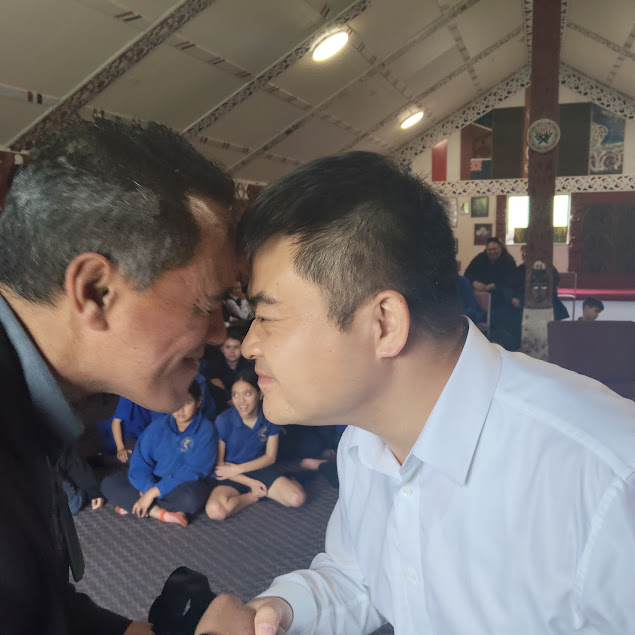
Through the Cooperative Framework, schools and tertiary providers are supported to establish sister school relationships, structured exchange programmes, study tours and institutional partnerships.
- Sister school relationship establishment and reinvigoration
- Structured student exchange programmes
- Study tours with in-country coordination
- Institutional partnerships and introductions
- Access to Jiangxi's 8.8M under-15 student pipeline
How It Works
A Staged, Governance-Driven Process
Eastern Bridge provides programme leadership and operational continuity. Participating entities retain authority; programme management is centralised to reduce administrative burden and prevent fragmentation.
A council, iwi or school signals intent to join the Cooperative platform. No legal or financial obligations are created.
Each participant nominates a contact person as the operational interface. Strategic mandate remains with elected members, trustees or boards.
Engagement proceeds through pilot activities — virtual workshops, youth exchange pilots, sister school introductions or targeted delegations.
Scaling only occurs where outcomes demonstrate value. The Framework is enabling rather than prescriptive — flexibility is intentional.
Jiangxi Province Profile
Economic, Demographic and Consumer Overview
Jiangxi is a mid-tier provincial economy — large enough to sustain meaningful trade, education and tourism relationships, but not as saturated or competitive as China's major coastal provinces. The data below provides the evidence base for engagement decisions.
Population Overview (End-2024)
| Indicator | Value |
|---|---|
| Total Population | 45.0 million |
| Urbanisation Rate | 63.77% |
| Rural Population | 36.23% |
| Net Population Change (2024) | +13,000 |
| Net Urban Growth (Nanchang) | +102,200 |
Jiangxi's population profile reflects a province undergoing steady urban transition rather than demographic decline.
Age Structure (End-2024)
| Age Group | % of Population | Approx. Population |
|---|---|---|
| 0–15 (Youth) | 19.55% | ~8.80 million |
| 16–59 (Working Age) | 60.73% | ~27.33 million |
| 60+ (Senior) | 19.72% | ~8.87 million |
GDP Performance (2024)
| Indicator | Value |
|---|---|
| Total GDP | RMB 3.420 trillion |
| GDP Growth (2024) | +5.1% YoY |
Jiangxi's growth rate places it within China's stable mid-growth provincial tier. It is not speculative or overheated — it demonstrates consistent industrial output and expanding service-sector activity.
GDP by Sector
| Sector | % of GDP |
|---|---|
| Primary (Agriculture) | 7.6% |
| Secondary (Industry) | 40.0% |
| Tertiary (Services) | 52.4% |
Industrial Strengths
The industrial base remains strong, with key sectors including:
- Rare earth processing — Ganzhou
- Lithium and new energy — Yichun
- Copper processing — Yingtan
- Solar photovoltaics — Shangrao
- Aviation manufacturing — Nanchang
- Ceramics — Jingdezhen
Per Capita Disposable Income (2024)
| Category | RMB | Approx. NZD |
|---|---|---|
| Urban | 47,514 | ~NZD 11,000 |
| Rural | 22,673 | ~NZD 5,250 |
| Urban : Rural Ratio | 2.1 : 1 | |
Urban income levels are close to China's national urban average. Rural incomes remain lower but are rising.
Per Capita Consumption Spending
| Indicator | Value |
|---|---|
| Average Annual Consumption | RMB 29,758 |
| Growth Trend | Online retail & consumer services |
Consumer Growth Categories
Consumption growth is particularly evident in categories relevant to NZ exporters:
- Beauty and skincare
- Health supplements
- Imported food and beverages
- Mother and baby products
- Wine and spirits
- Livestream commerce
Trade Profile (2024)
| Category | RMB (billion) |
|---|---|
| Total Trade | 470.75 |
| Exports | 304.55 |
| Imports | 166.20 |
This trade structure reflects Jiangxi's position as a processing and manufacturing hub rather than purely a consumer province.
Major Exports
- Solar panels
- Lithium batteries
- Electric vehicles
- Textiles and garments
- Machinery
Major Imports
- Copper ore
- Lithium ore
- Polysilicon
- Industrial chemicals
- Machinery components
Retail Sales (2024)
| Category | RMB (Trillion) |
|---|---|
| Total Retail | 1.282 |
| Urban Retail | 1.058 |
| Rural Retail | 0.224 |
| Online Retail | 0.294 |
E-Commerce Infrastructure
E-commerce penetration is strong, supported by major logistics networks:
- JD Logistics
- Pinduoduo
- Cainiao (Alibaba)
- SF Express
Education System Scale
| Level | Students |
|---|---|
| Primary | 4.23 million |
| Junior Middle School | 1.91 million |
| Senior High School | 0.97 million |
| Tertiary | ~1.09 million |
| International Students (hosted) | ~12,000 |
Outbound Study Destinations
Estimated distribution of Jiangxi outbound students by destination:
Prefecture-Level City Comparison
Selected cities within Jiangxi Province — each offering distinct sector-specific engagement opportunities.
| City | Population | GDP 2025 (NZD bn) | Household Disposable Income (NZD) | Key Sectors |
|---|---|---|---|---|
| Nanchang (Capital) | 6.7m | 180.9 | 33,452 | Aviation, Finance, Services |
| Ganzhou | 8.96m | 116.0 | 22,623 | Rare Earths, Agriculture |
| Jiujiang | 4.5m | 94.4 | 28,444 | Petrochemicals, Logistics |
| Yichun | 4.9m | 87.3 | 26,667 | Lithium, New Energy |
| Xinyu | 1.2m | 27.0 | 30,000 | Steel, Solar |
| Jingdezhen | 1.7m | 26.4 | 24,889 | Ceramics, Tourism, Culture |
Provincial Positioning for New Zealand Regions
Jiangxi is not China's wealthiest province. It is not its most internationally exposed. That is precisely what makes it a suitable partner for New Zealand regions.
What Jiangxi Is
- Industrially capable
- Structurally upgrading
- Urbanising steadily
- Demographically balanced
- Increasingly consumption-driven
- Institutionally stable
What This Offers NZ Regions
- Manageable market entry
- Realistic education demand
- Stable tourism potential
- Sector-specific cooperation pathways
- Lower volatility than major coastal provinces
- 465,000 new urban jobs created in 2024
The Cooperative Framework is not symbolic diplomacy. It is a structured instrument for managed international engagement, aligned with community benefit, youth opportunity and realistic economic dialogue.
Cost Structure
Financial Discipline — No Standing Obligations
A defining feature of the Cooperative Framework is the absence of standing financial obligation. Financial exposure arises only when a participating entity elects to engage in a specific initiative.
There are no annual subscriptions, levies or pooled funding requirements to join the Cooperative Framework.
Financial commitments arise only when a participant elects to take part in a specific initiative — agreed in advance, scoped before commitment.
No retrospective cost allocation occurs. No entity carries financial liability for another participant's engagement.
What the Framework Protects
Risk Management
Conservative Risk Architecture
The Framework is built around conservative risk management principles consistent with New Zealand local government standards.
Political Risk
The Framework does not function as foreign policy and does not create binding trade commitments. Engagement remains within local government and community functions.
Financial Risk
Mitigated through the absence of standing obligations and project-by-project approval processes requiring explicit governance sign-off.
Reputational Risk
Managed through structured governance oversight, documented reporting and staged implementation. Activities are planned, recorded and reviewable.
Operational Risk
Mitigated through central coordination and in-country capability, reducing the likelihood of fragmented or unmanaged engagement.
Capacity Risk
Addressed by relieving councils, iwi and schools of the need to independently manage provincial-level relationships and logistics.
How to Get Involved
Joining the Jiangxi Cooperative Framework
Participation is deliberately simple, staged and low-risk. The Framework has been designed to remove the traditional barriers that prevent councils, iwi and schools from engaging internationally.
Participation begins with formal endorsement from the relevant governance body. This endorsement does not bind the organisation to specific initiatives — it signals intent to explore structured engagement under agreed parameters.
- Local Government: Council resolution or executive-level approval
- Iwi: Trustee or rūnanga approval confirming equal partner participation
- Schools: Board-level or principal-level endorsement
Each participating entity nominates a primary contact person who acts as the operational liaison between the organisation and the Cooperative Framework. They do not carry political responsibility — they coordinate communication and ensure proposed initiatives are reviewed through appropriate governance channels.
Following endorsement, the organisation is formally recognised as a participant. Participation status may range from light observational involvement to active programme leadership — flexibility is a core design feature.
- Observer — light involvement, information sharing
- Active Participant — project-based engagement
- Strategic Partner — ongoing sector involvement
Engagement becomes meaningful when aligned to strategic priorities. The Cooperative Framework operates on alignment, not speculation — there is no expectation that every participant engages across all pillars.
- Youth exchange and leadership
- Education cooperation
- Tourism development
- Sector-specific dialogue (agri-food, renewable energy, manufacturing)
- Cultural engagement
Most new participants begin with a pilot initiative. Pilots are deliberately small in scope — reviewed before scaling. This staged model ensures that engagement grows only where value is demonstrated.
- A virtual institutional introduction
- A structured sector workshop
- A sister school exploration
- A youth exchange pilot
- Participation in a targeted delegation
- Growth is incremental — no pressure to escalate
- Some participants remain lightly engaged
- Others develop deeper sector engagement over time
- Five-year roadmap emphasises staged expansion and review
What Participation Looks Like
In Practice
Engagement is practical, contained and governance-aligned. It is not symbolic. Here are examples of what participation looks like for different organisations.
A council supporting a youth leadership delegation to Jiangxi
An iwi establishing a cultural exchange with a Jiangxi city
A secondary school forming a sister school relationship
A regional tourism organisation hosting a structured group visit
A sector roundtable connecting NZ and Jiangxi industry participants
Structural Integrity
Designed for Long-Term Operation
Many international relationships fail due to over-commitment, lack of structure, or dependence on individual champions. The Jiangxi Cooperative Framework has been designed to avoid those pitfalls.
In doing so, it creates a stable platform capable of operating beyond electoral cycles and leadership change.
Ready to Begin the Conversation?
If your organisation is considering international engagement with China at provincial scale, the next step is straightforward. Initiate a discussion with Eastern Bridge, review alignment with your strategic priorities, and begin with a pilot initiative.
From there, engagement grows only where it proves valuable.