

Studying Chinese in New Zealand is no longer a niche interest. It is a practical skill linked to trade, tourism, education, community engagement, and future career development. China has been New Zealand's largest trading partner since 2017, with two-way trade worth more than NZ$41 billion in the year ending September 2025. That means Chinese language ability is not just academically useful — it has real-world value for businesses, schools, public agencies, and local communities.

Why Chinese Matters in the New Zealand Context
The strongest argument for learning Chinese in New Zealand is that the relationship already matters at scale. MFAT states that China has been New Zealand's largest trading partner since 2017. New Zealand exported NZ$22.82 billion to China in the year ending September 2024, while imports from China were NZ$18.29 billion. MFAT also notes that New Zealand goods exports to China have quadrupled since the China–New Zealand Free Trade Agreement entered into force in 2008.
This matters because language capability supports economic capability. Businesses that can communicate more effectively with Chinese partners are better placed to build trust, understand expectations, reduce friction, and develop longer-term relationships. MFAT's China Capable Public Sector programme exists for exactly this reason: it recognises that New Zealand's relationship with China presents major opportunities and challenges, and that culture, language, and scale all matter. That logic applies just as much to exporters, tourism operators, educators, and local communities as it does to central government agencies.
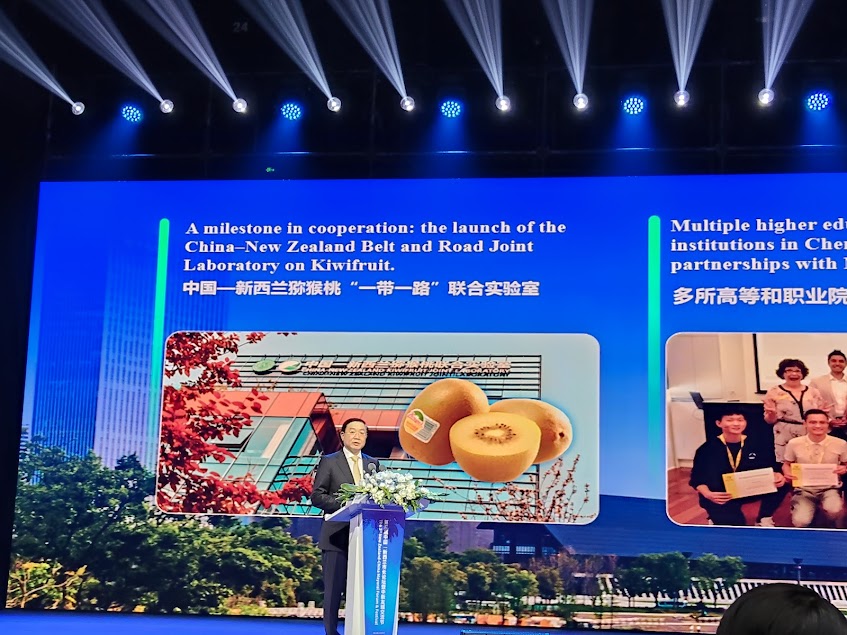
There is also a services dimension. China is New Zealand's largest source of international students. The New Zealand China Council reports 27,980 Chinese students enrolled at New Zealand education institutions in 2024, making up 33.5% of all international student enrolments. Chinese visitors are also a high-value tourism market: Tourism New Zealand reports Chinese visitor spend of about NZ$1.2 billion in the year ending May 2025. For schools, tertiary providers, hospitality businesses, cultural attractions, and regional visitor economies, Chinese language capability can be commercially useful as well as culturally valuable.
| Area | Current Significance to NZ | Why Language Helps |
|---|---|---|
| Trade | China has been NZ's largest trading partner since 2017; two-way trade was over NZ$41b in YE Sep 2025 | Helps with relationship-building, negotiations, market understanding, and long-term trust |
| Exports | NZ exports to China were NZ$22.82b in YE Sep 2024 | Useful for exporters, agribusiness, logistics, and international sales |
| Tourism | Chinese visitors spent about NZ$1.2b in YE May 2025 | Improves visitor experience, service quality, and conversion in tourism and retail |
| International Education | 27,980 Chinese students in 2024, 33.5% of total international enrolments | Supports recruitment, learner support, pastoral care, and education partnerships |
Career and Business Benefits
For New Zealanders, studying Chinese can create a meaningful point of difference. It is relevant in trade, tourism, education, logistics, diplomacy, journalism, translation, international development, public policy, and customer-facing industries. Even a beginner or intermediate level of Mandarin can make a practical difference: introducing yourself, handling basic social etiquette, understanding common business language, or showing a willingness to engage in another language can immediately strengthen rapport.

This is especially important for regional New Zealand. Areas built around horticulture, food production, tourism, export education, and migrant settlement all benefit from better China capability. The language itself will not replace commercial expertise or professional training, but it does add another layer of value. It makes communication smoother, supports better relationship management, and helps New Zealanders engage with one of the country's most important economic and cultural partners from a position of greater confidence.
"International engagement is not a luxury for New Zealand communities — it is a strategic necessity. Done properly, it creates jobs, builds youth capability, attracts investment, and positions regions for long-term resilience."
Educational and Cognitive Benefits
The case for learning Chinese is not only economic. The Ministry of Education's language resources note that bilingual learners have cognitive advantages over those who know only one language, and that bilingualism and multilingualism support cognitive and social learning. A 2024 Ministry of Education update on the proposed National Languages Strategy also states that language learning offers cognitive, intercultural, and economic benefits, helping students build key cognitive skills while gaining insight into their own and other cultures.
Chinese can be especially valuable because it stretches learners in different ways. It introduces a tonal sound system, a character-based writing system, and patterns of expression that differ significantly from English. That does not make it inaccessible; it makes it intellectually useful. Learners often develop stronger listening habits, greater attention to context, and a better understanding of how language works. In practical terms, language learning can also build confidence, discipline, curiosity, and long-term learning habits that transfer into other parts of life and work.
Cultural and Social Benefits
Studying Chinese also deepens cultural understanding. New Zealand Chinese Language Week describes itself as a Kiwi-driven initiative designed to increase Chinese language learning and bridge the cultural and linguistic knowledge gap between China and New Zealand. That goal matters because language is often the first step toward better understanding of values, customs, humour, etiquette, and worldview. People who study Chinese do not just learn vocabulary; they gain tools for navigating cross-cultural relationships more thoughtfully.
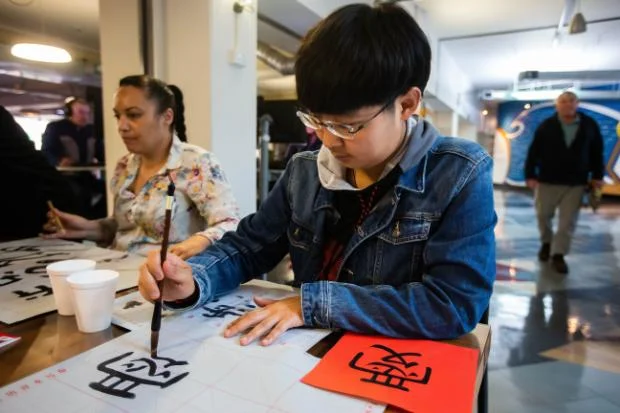
There is already evidence of local appetite for this in New Zealand communities. Hastings District Libraries partnered with local organisations for Chinese Language Week activities and Chinese language festival events, including community-led storytime, picture-book displays, and cultural activities. These kinds of events show that Chinese language learning does not only belong in formal education. It can be community-based, intergenerational, welcoming, and practical.
That community dimension matters for social cohesion. Learning Chinese can help New Zealanders connect more naturally with Chinese-speaking migrants, students, families, and visitors. It can also help Chinese New Zealanders feel that their language and culture are seen as part of the country's shared future, not just something separate or external.
The Challenge: Demand Exists, but Access Is Uneven
Despite the benefits, New Zealand still faces real barriers. The New Zealand China Council has long pointed to the shortage of trained Chinese language teachers and to the sharp drop-off between primary and secondary learning. More recent statistics show that Chinese remains below several other languages at secondary level, even though primary-level participation has grown strongly. The result is a weak pipeline: many students get a brief introduction, but too few continue long enough to gain practical proficiency.
Regional access is part of the problem. Major centres tend to have more language options, more teachers, and more cultural events. Smaller centres and provincial communities often have fewer opportunities, even where there is genuine interest from learners, businesses, and families. This is exactly where flexible community programmes can make a difference: they lower barriers, widen participation, and create practical pathways for people who would never otherwise enrol in a formal language course.
| Pathway | Strengths | Limitations |
|---|---|---|
| Primary school learning | Strong early exposure; growing participation | Often limited hours and weak progression |
| Secondary school learning | Can build real proficiency | Lower uptake; fewer schools offer continuity |
| Tertiary study | Deeper academic and professional pathways | Concentrated in larger centres |
| Community classes | Flexible, practical, welcoming for adults | Often dependent on local initiative and funding |
| Online / self-study | Accessible anywhere | Harder to sustain without guidance or peer support |
| Workplace training | Highly relevant to business needs | Usually limited to selected sectors or employers |
Eastern Bridge Education: A Practical Local Solution
This is where Eastern Bridge Education can make a real difference. Eastern Bridge Education is now offering free Mandarin classes and is actively promoting enrolments across Napier, Hastings, Whakatāne, and Ōpōtiki. The courses are positioned as open, welcoming, and suitable for people wanting to start or continue their Chinese language journey. The strongest feature of this offer is accessibility: free local classes remove one of the biggest barriers that often stops adults and community learners from even beginning.
For Eastern Bridge, this is more than a language class. It aligns with a broader regional-development and community-engagement model. Free Chinese classes can help local residents build confidence, help businesses and community organisations develop China capability, and create more grassroots interest in language learning in places that are often overlooked by larger institutions.
Learn Chinese for Free with Eastern Bridge Education
Eastern Bridge Education is now offering free community Mandarin classes. Whether you are a complete beginner, a business owner wanting practical language skills, or someone interested in Chinese culture and communication, these classes offer an accessible local pathway to get started.
Classes are practical, welcoming, and community-based — designed for people who want to build real skills without a major cost barrier.
Conclusion
For New Zealand, studying Chinese is not only about language learning. It is about becoming more capable in a world where China remains economically significant, culturally important, and deeply connected to New Zealand's future. The national case is already clear: trade is large, tourism and education links are substantial, and the demand for stronger China capability is real. The local case is just as strong: communities benefit when more people can communicate across cultures, participate in exchange, and understand one another better.
The challenge now is practical access. New Zealand needs more pathways that are local, affordable, and relevant to ordinary learners. That is why community-based initiatives matter. Eastern Bridge Education's free Mandarin classes in Napier, Hastings, Whakatāne, and Ōpōtiki are the kind of practical, regional response that can help close the gap between interest and action. They turn a broad national need into a real local opportunity.
- Ministry of Foreign Affairs and Trade (MFAT). New Zealand's relationship with China. mfat.govt.nz
- MFAT. China trade facts. Trade data for year ending September 2024 and September 2025. mfat.govt.nz
- New Zealand China Council. NZ–China Relationship Dashboard. 2024 data including student enrolments and language learning statistics. nzchinacouncil.org.nz
- Tourism New Zealand. Chinese visitor spend data. Year ending May 2025. tourismnewzealand.com
- Ministry of Education. National Languages Strategy update. 2024. education.govt.nz
- New Zealand Chinese Language Week. About Chinese Language Week. chineselanguageweek.co.nz
- MFAT. China Capable Public Sector programme. mfat.govt.nz